Key takeaways
- A house mouse can fit through a hole about the width of a pencil, 1/4 inch or 6 millimeters across (CDC).
- Mice climb rough walls, brick and concrete and can jump onto surfaces 10 inches or more above the floor, so entry points are not only at ground level.
- Utility penetrations, gaps under doors and garage doors, unscreened vents and roofline openings are the most common ways in.
- Seal small holes with steel wool held in place by caulk or spray foam; cover larger openings with metal, cement or 1/4-inch hardware cloth.
- Rubber, plastic, vinyl and thin wood will not stop a determined mouse, which can gnaw through them.
In this article
Mice get into homes through small gaps you would never think twice about: the space around a pipe under the sink, the corner of a garage door that does not seal, an unscreened vent or an opening along the roofline. According to the CDC, a mouse can fit through a hole the width of a pencil, about 1/4 inch across, so any gap you can push a pencil into is a potential doorway.
Knowing where mice enter is the most practical part of keeping them out. Traps and baits remove the mice already inside, but sealing the entry points is what stops new ones from following. This guide covers the most common entry points in South Florida homes, how mice use them, and which repairs actually hold up against a rodent’s teeth.
How Mice Get Through Such Small Openings
The house mouse is small, flexible and persistent. The CDC puts the limit at a hole about 1/4 inch (6 mm) in diameter, and University of Nebraska Extension says mice can squeeze through openings slightly larger than 1/4 inch. That is smaller than a dime.
Size is only part of it. According to Nebraska Extension, mice:
- Climb almost any rough vertical surface, including wood, brick, concrete and weathered sheet metal
- Jump vertically onto a flat surface 10 inches above the floor or across a 3-foot gap; a second Nebraska guide puts their vertical jump as high as 18 inches
- Hang upside down from screen wire
- Gnaw through cardboard, wood, rubber, vinyl, plastic and even aluminum sheeting and concrete block
Put together, those abilities mean entry points are not only at ground level. A gap at the top of a wall, around a soffit or behind a gutter is within reach.
Why Mice Keep Trying to Get Inside
Mice look for food, water and shelter, and your home offers all three. They need very little: a UF/IFAS entomology blog notes that a mouse can survive on about one-tenth of an ounce of food a day. They also stay close to home; Nebraska Extension reports that mice seldom venture more than 50 feet from their shelter and food supply. A colony living in dense landscaping or a cluttered shed beside the house is already within range of your walls.
Once inside, they multiply fast. A female can produce litters of 5 to 6 young, with up to 5 to 10 litters a year under ideal conditions and about 18 to 21 days between mating and birth. That is why a single open gap can turn into a real infestation within a season.
Need help with pests in South Florida?
Toro Pest Management has protected homes and businesses since 1969. Get a free inspection and $25 off your first service, backed by our 110% Satisfaction Guarantee: if the pests come back, so do we, at no extra cost.
The Most Common Mouse Entry Points
Utility Lines and Pipe Penetrations
Every place a pipe, wire or line passes through a wall is a potential gap. The CDC lists holes for electrical, plumbing, cable and gas lines on its outside checklist, and pipes under sinks, washing machines and water heaters on the inside. In South Florida homes, check where the AC refrigerant lines and condensate drain pass through the wall, where hose bibs and irrigation lines exit, and where cable and phone lines were added after construction. Installers often drill an oversized hole and leave the gap.
Doors and Garage Doors
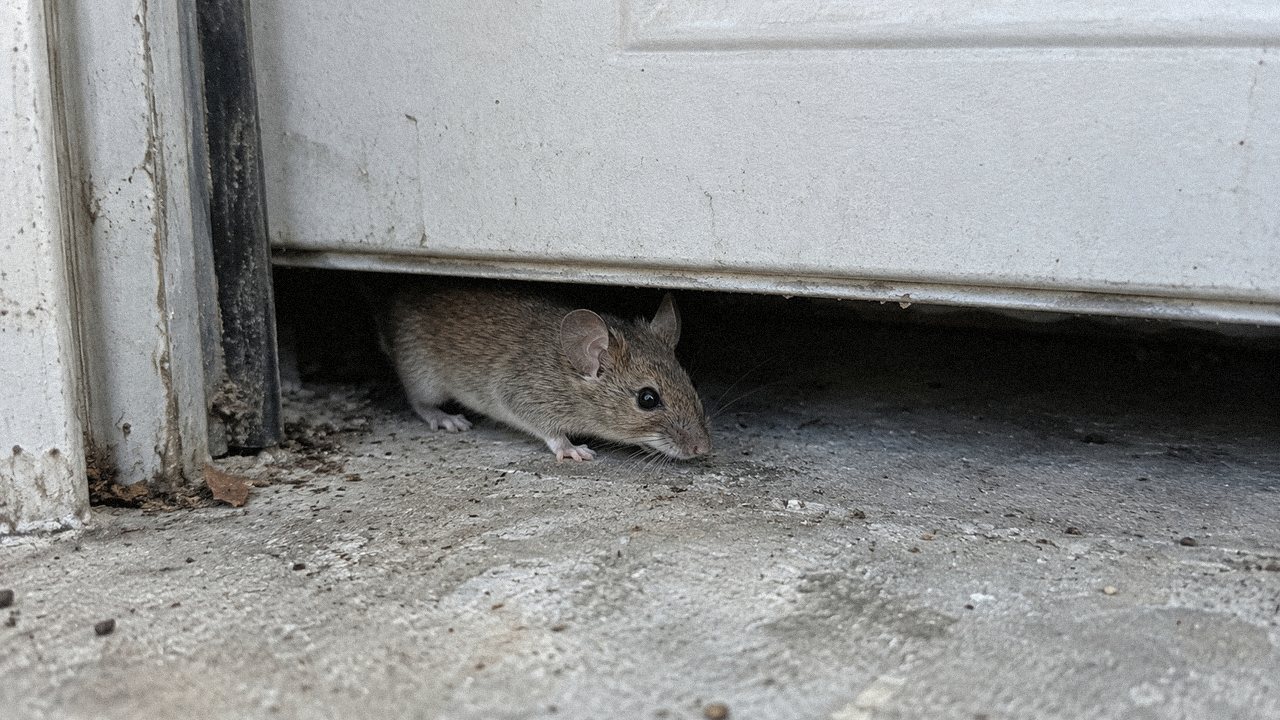
Doors that do not fit tightly are one of the easiest ways in. Nebraska Extension recommends keeping the gap between the bottom of an exterior door and the threshold to less than 1/4 inch. Garage doors are a frequent problem because the rubber seal at the bottom wears, cracks or does not meet an uneven slab, leaving a gap at one corner. Garages also hold the food, clutter and nesting material mice love, as explained in why rodents love your garage.
Windows and Screens
The CDC lists windows and doors without weather stripping among the main outside entry points. Torn window screens, gaps where window frames meet block walls and damaged screen enclosures around pools and patios all give mice a path inward.
Vents
Dryer vents, attic and soffit vents and crawl space vents are designed to move air, which also makes them open doors if they are not screened. Nebraska Extension recommends galvanized hardware cloth with 1/4-inch mesh to exclude mice. For dryer vents, it warns that improper screening speeds up lint buildup and raises fire risk, and suggests a vent cover with a floating ball or a similar design instead of fine screen.
Roofline, Eaves and Soffits
The CDC lists the roof, among the rafters, gables, eaves and soffits, as an outside entry zone. Damaged soffit panels, gaps where the fascia meets the roof, loose roof tiles and openings around roof vents are reachable for a climbing mouse and even easier for roof rats, the climbing rat common in Florida. If you hear scratching overhead, read how rats sneak in from above.
The Foundation and Slab Edge
The CDC lists the space between the foundation and the ground as an entry point. Cracks in the slab edge or block wall, gaps where siding or trim meets the foundation, and openings around floor drains in laundry rooms and garages all need a look.
Landscaping That Leads the Way
Dense shrubs, vines on walls, stacked firewood and debris against the house do not create holes, but they give mice cover while they search for one. Trim plants away from walls, keep a clear strip along the foundation and store materials off the ground and away from the house.
| Entry point | What to look for | How to seal it |
|---|---|---|
| Pipe and wire penetrations | Gaps around AC lines, plumbing, cable and gas lines | Steel wool, held in place with caulk or spray foam |
| Exterior doors | Daylight under the door, gaps over 1/4 inch | Tight-fitting door, threshold or metal door sweep |
| Garage door | Worn or cracked bottom seal, gap at one corner | Replace the seal; repair an uneven threshold |
| Vents | Missing or torn screens, loose covers | 1/4-inch galvanized hardware cloth; rodent-resistant dryer vent cover |
| Roofline and soffits | Damaged soffit panels, gaps at fascia, loose tiles | Metal flashing or sheet metal, repaired soffits |
| Foundation and slab | Cracks, gaps between trim and slab | Cement or mortar for cracks; metal flashing at the base |
| Windows and screens | Torn screens, missing weather stripping | Repair screens; add weather stripping |
Which Materials Actually Keep Mice Out
The right material matters as much as finding the hole. Mice will chew through soft fillers, and Nebraska Extension lists latex, plastic, rubber and boards less than 1/2 inch thick as unsuitable.
What works, according to the CDC and Nebraska Extension:
- Steel wool or copper mesh packed into small holes, with caulk or spray foam around it to hold it in place
- Hardware cloth (galvanized, 1/4-inch mesh) for vents and larger openings
- Sheet metal or metal flashing, 24 gauge or heavier for galvanized steel, around the base of the house and over gnawed edges
- Cement or mortar for gaps in masonry and around pipes
- Lath screen or metal sheeting for larger holes
Signs Mice Have Already Found a Way In
If you find evidence inside, assume there is an open entry point nearby. Nebraska Extension describes the classic signs:
- Droppings about 1/8 to 1/4 inch long with pointed ends, in drawers, cabinets and along walls
- Gnaw marks on food packages, wood and wiring
- Nests of shredded paper, fabric or insulation in hidden, sheltered spots
- Scratching and squeaking in walls and ceilings, often at night
- A musky odor with long-term infestations
Check wiring in the attic and garage for gnawing too. For help identifying the pest itself, see our house mouse profile.
When to Call a Professional
Sealing is detailed work. One missed gap is enough, and many entry points are on the roof, behind appliances or inside wall voids where they are hard to find and harder to reach. If you keep finding droppings after sealing, hear activity in the attic, or have rodents in a business where food is handled, it is time for help.
Toro’s rodent control service starts with a free inspection to identify which rodents you have, where they nest and every gap they use to get inside, from the roofline to the foundation. Technicians remove the rodents with trapping and baiting chosen for your property, seal the entry points with exclusion work, and offer dropping and urine disinfecting and sanitation. Toro has protected South Florida homes and businesses since 1969, and if the bugs come back, so will Toro, at no additional cost to you.

Contact Toro today
A free inspection & $25 off your first service
A trained Toro technician inspects your home or business, explains what was found and gives you a clear plan and quote, backed by our 110% Satisfaction Guarantee.
305-594-4767Frequently Asked Questions
Can a mouse fit through a hole the size of a dime?
Will mice leave if I seal all the entry points?
Does expanding foam keep mice out?
How do I find where mice are getting in?
Why do I have mice when my house is clean?
Sources
- How to Seal Up to Prevent Rodents, Centers for Disease Control and Prevention
- Controlling House Mice, University of Nebraska-Lincoln Extension
- Rodent-Proof Construction — Structural, University of Nebraska-Lincoln Extension
- Rat and Mouse Control, UF/IFAS Extension
- How to Clean Up After Rodents, Centers for Disease Control and Prevention
- Prevention Is The Key To Keeping Rodents Out Of Your Home, UF/IFAS Entomology and Nematology Department
Educational content. This article is for general information about pests in South Florida and is not medical, legal or professional advice. If you have a bite, sting or allergic reaction, contact your doctor; in an emergency, call 911. Pest problems vary from home to home, so a licensed professional should inspect before treatment. When using any pesticide, always read and follow the product label.