Key takeaways
- Most expensive termite damage starts as a small sign someone ignored: a mud tube, a few wings or one hollow-sounding board.
- Store-bought sprays kill the termites they touch, not the colony; UF/IFAS says over-the-counter products are unlikely to control Formosan termites.
- Tenting does nothing for subterranean termites, so identify the species before paying for any treatment.
- Sprinklers that wet the walls and mulch piled against the foundation invite termites and can void termite warranties.
- Read the contract: Florida termite warranties range from retreatment only to retreatment and repair.
In this article
The most expensive termite mistakes are not about termites at all. They are decisions: waiting after the first sign, spraying the termites you can see, paying for the wrong treatment, ignoring a leak or letting a contract lapse. Each one gives a colony more time to feed inside your walls, and time is what turns a manageable problem into structural repairs.
Termites cause billions of dollars in structural damage across the US every year, according to the EPA, and Florida leads the country in termite diversity, with 20 established species, according to UF/IFAS. South Florida alone deals with Formosan, Asian and native subterranean termites plus drywood termites. Here are the 10 mistakes that most often turn a small termite problem into a big bill, and what to do instead.

Mistakes When You First Notice Termites
Mistake 1: Ignoring the First Warning Sign
Most major infestations announce themselves early, quietly. A thin mud tube on the slab edge, a few wings on a windowsill, a baseboard that sounds hollow or paint that bubbles for no reason. Homeowners often assume it is minor or old.
The problem is that termites work out of sight, so by the time anything is visible, the colony has usually been feeding for a while. Every month of delay is more wood eaten. Treat any of these as a reason to call for an inspection:
- Mud tubes on the foundation, garage walls, piers or tree trunks
- Discarded wings or swarmers indoors, especially in several rooms
- Small piles of hard, sand-like pellets under wood or furniture
- Wood that sounds hollow or gives way when probed
- Doors or windows that suddenly stick
If you are not sure whether you saw termites or flying ants, our guide to termites vs. flying ants shows the differences.
Mistake 2: Assuming Termite Damage Would Be Obvious
Termite damage does not look like a storm or a burst pipe. Termites hollow wood from the inside and often leave a thin outer surface intact, so studs, trusses, subfloors and cabinets can look normal while their insides are mostly gone. As FDACS puts it, termites do their damage behind closed walls, and many homeowners only discover it during remodeling.
Waiting until damage is visible means waiting until it is advanced. Probing wood with a screwdriver, checking behind stored items in the garage and looking under sinks are simple ways to catch what the eye misses.
Mistakes in Choosing a Termite Treatment
Mistake 3: Spraying What You Can See
Store-bought sprays and foams are the most common DIY response, and the most misleading. They kill the termites they touch, the swarm looks gone, and the colony keeps feeding.
The EPA notes that products that only claim to kill termites target the termites that directly contact the pesticide, not the whole infestation, and have not demonstrated the ability to protect structures. For Formosan termites, UF/IFAS is blunt: control requires professional pest control services, and over-the-counter products are unlikely to be effective. Our article on why DIY termite treatments fail covers the details.
Mistake 4: Paying for the Wrong Treatment
South Florida has two very different kinds of structural termites, and the treatment that works for one can be useless for the other.
- Drywood termites live inside dry wood above ground. Localized colonies can be spot treated, and tenting is the most cost-effective choice for multiple colonies, according to UF/IFAS.
- Subterranean termites live in the soil. UF/IFAS says fumigation is useless against them, because the rest of the colony can move right back in after the tent comes off. They are controlled with baits that eliminate the colony or liquid termiticides that keep it out of the treated zone.
Tenting a house for a subterranean problem means paying for a major treatment and still having termites. Insist on species identification first.
Need help with pests in South Florida?
Toro Pest Management has protected homes and businesses since 1969. Get a free inspection and $25 off your first service, backed by our 110% Satisfaction Guarantee: if the pests come back, so do we, at no extra cost.
Mistakes Around Your Home and Yard
Mistake 5: Fixing the Termites but Not the Moisture
Subterranean termites need moisture, and South Florida supplies plenty: summer rains, AC condensate lines, sprinklers and roof leaks. The Florida Department of Agriculture and Consumer Services warns that an unrepaired leaking pipe or foundation crack may be inviting termites into your home.
Sprinklers are a classic offender. UF/IFAS notes that irrigation should be at least 1 foot from the building and that water spraying the walls can void termite control warranties. Treating the termites while the wall stays wet leaves the conditions that attracted them in place.
Mistake 6: Landscaping That Feeds and Hides Termites
Landscaping choices rarely look like a termite decision, but several common habits help colonies:
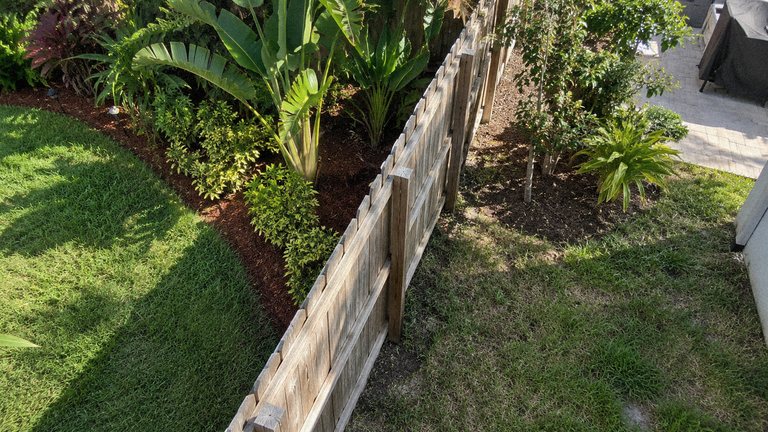
- Mulch piled high against the foundation. UF/IFAS recommends a layer under 2 inches near the house and an inspection strip of about 6 inches next to the foundation. Thick mulch holds moisture and hides mud tubes.
- Wood touching soil and the house. Firewood, lumber, trellises, wooden steps and planters create a direct path.
- Salvaged timbers and railroad ties. UF/IFAS warns that large pieces of infested wood can spread invasive termites like the Formosan subterranean termite.
- Siding and foam board buried in soil. FDACS says siding should stop 6 to 8 inches above the soil, warns that termites easily tunnel through foam insulation board in contact with soil and says entry behind buried siding is virtually impossible to spot.
Mistakes in Long-Term Termite Protection
Mistake 7: Skipping Inspections Because Nothing Looks Wrong
The most dangerous termite infestation is the one nobody has seen. FDACS calls an annual termite inspection a must for older homes, while also noting that an inspection may not discover termites the moment they first infest, which is why inspections need to be repeated rather than done once.
An annual inspection is also when an inspector spots the conditions that lead to termites: a new leak, mulch creeping up the wall, a slab crack, a fence now touching the house. Fixing those early costs far less than any treatment.
Mistake 8: Signing a Termite Contract Without Reading It
Termite contracts in Florida are not all the same. FDACS describes three warranty types: retreatment only, retreatment and repair, and spot or no warranty. The retreatment-and-repair type generally costs more, but it is the only one that addresses damage. FDACS also points out that it cannot arbitrate contract disputes between homeowners and pest control companies; those go to civil court.
Before you sign, confirm the company is licensed, ask which warranty type you are getting, what the renewal terms are and what conditions on your side, such as sprinklers wetting the walls, could void it.
Mistake 9: Treating Once and Forgetting About It
Termite protection is ongoing. UF/IFAS notes that liquid termiticides keep termites out of the treated zone but are unlikely to eliminate colony activity in the surrounding area, so new or surviving colonies can return. FDACS notes that bait stations must be checked periodically, with bait added when termites are feeding.
Letting a contract lapse, ignoring renewal notices or covering bait stations with pavers, soil or new landscaping leaves a home unprotected without anyone noticing. Keep your records, keep stations accessible and keep the annual visits.
Mistake 10: Assuming Insurance Will Pay for Repairs
Many homeowners learn too late that standard home insurance does not cover termite damage. For example, the New Jersey Department of Banking and Insurance summary of a standard homeowners policy lists “termites, insects, rats, mice, birds or other vermin” among the losses the policy does not cover. Policies differ by state and company, so read the exclusions in yours. Talk to your agent, but plan as if repairs will come out of your pocket. Our article on whether termite damage is covered by homeowner’s insurance goes deeper, and how termites can impact your financial stability covers the bigger budget picture.
Costly Mistakes at a Glance
| Mistake | Why it gets expensive | Better move |
|---|---|---|
| Ignoring early signs | Colony keeps feeding for months | Call for an inspection at the first sign |
| Waiting for visible damage | Damage is inside the wood | Probe wood and inspect yearly |
| DIY sprays | Kills a few, not the colony | Professional baits or soil treatment |
| Wrong treatment | Tenting does not reach soil colonies | Identify the species first |
| Ignoring moisture | Damp soil keeps attracting termites | Fix leaks, redirect sprinklers |
| Mulch and wood against the house | Feeds termites and hides mud tubes | Thin mulch, 6-inch inspection strip |
| No inspections | Hidden activity spreads | Annual professional inspection |
| Unread contract | Repairs may not be covered | Know your warranty type |
| One-and-done treatment | Colonies return | Keep monitoring and renewals |
| Counting on insurance | Insect damage is commonly excluded | Budget for prevention |
How Toro Helps You Avoid These Mistakes
Toro’s termite control service starts with a free inspection: a trained technician identifies the species and checks how far the damage goes, then explains the options. For subterranean termites, that is the Sentricon baiting system installed around the property, with no drilling into the slab and no trenches, and stations that stay in place for year-round protection. For drywood termites, it is TORO-GUARD non-tenting injection for localized colonies or tent fumigation when they have spread through the structure. Toro has protected South Florida homes since 1969, and if the bugs come back, so will Toro, at no additional cost to you. To learn the species behind most local damage, browse our termite pest library.
Contact Toro today
A free inspection & $25 off your first service
A trained Toro technician inspects your home or business, explains what was found and gives you a clear plan and quote, backed by our 110% Satisfaction Guarantee.
305-594-4767Frequently Asked Questions
What is the most common termite mistake homeowners make?
Should I knock down termite mud tubes?
Can I just treat the spot where I see termites?
How often should I get a termite inspection in South Florida?
Are termite bait stations a one-time installation?
Sources
- Protecting Yourself and Your Property Against Subterranean Termites, Florida Department of Agriculture and Consumer Services
- The Facts About Termites and Mulch (EDIS IN651), UF/IFAS Extension
- Formosan Subterranean Termite, Coptotermes formosanus (EDIS IN278), UF/IFAS Extension
- Termites: How to Identify and Control Them, U.S. Environmental Protection Agency
- Termite Season: UF/IFAS Scientist Answers Common Questions, Corrects Misconceptions, UF/IFAS News
- Homeowners Insurance Policy Summary, New Jersey Department of Banking and Insurance
Educational content. This article is for general information about pests in South Florida and is not medical, legal or professional advice. If you have a bite, sting or allergic reaction, contact your doctor; in an emergency, call 911. Pest problems vary from home to home, so a licensed professional should inspect before treatment. When using any pesticide, always read and follow the product label.