Key takeaways
- The FWC says iguanas can pass Salmonella to people through contact with water or surfaces contaminated by their droppings.
- In one study, all 12 green iguanas tested shed Salmonella at least once, and 83% of their fecal samples were positive.
- Children under 5, adults 65 and older and people with weakened immune systems are more likely to get sick from reptile germs, according to the CDC.
- Healthy-looking reptiles can carry Salmonella, so treat every iguana dropping on a dock, deck or pool as a possible source.
- Wear gloves to clean droppings, wash your hands with soap and water, and keep children and pets away from iguana waste.
In this article
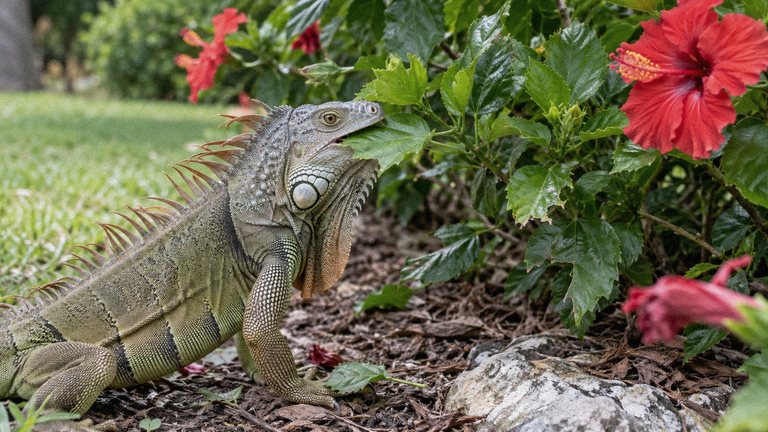
Yes, iguanas can carry disease, and the one that matters most is Salmonella. The Florida Fish and Wildlife Conservation Commission (FWC) says iguanas can transmit the bacterium to people through contact with water or surfaces contaminated by their feces, and in South Florida those droppings end up on docks, pool decks, patios and even inside swimming pools.
The risk is not that an iguana will chase you and make you sick. It is the everyday contact: a toddler crawling on a pool deck, a dog sniffing droppings on the dock, a homeowner hosing off a seawall and then grabbing a sandwich. This guide explains what iguanas carry, who is most vulnerable, how to clean up safely and how to cut the problem off at the source.
How Common Is Salmonella in Iguanas?
Reptiles are well-known carriers. The CDC says Salmonella is the most common germ reptiles and amphibians carry, that it often lives in their digestive tracts and that animals can carry it while looking perfectly healthy.
Iguanas specifically have been studied. In a 1998 study published in the Journal of the American Veterinary Medical Association, researchers sampled 12 captive green iguanas weekly for 10 weeks. Every one of them shed Salmonella at least once, 7 carried more than one serotype, and the bacteria turned up in 88 of 106 fecal samples. The authors concluded that most iguanas carry a stable mix of Salmonella types and shed them on and off or continuously.
Source: JAVMA, Burnham et al. 1998
That study looked at pets, not wild iguanas, but the lesson carries over: you cannot tell by looking whether an iguana or its droppings are carrying the bacteria, so treat all of them as if they are. UF/IFAS likewise describes iguana droppings as a possible source of Salmonella, “a common cause of food poisoning.”
How Big Is the Problem Nationally?
A CDC report on reptile-associated salmonellosis estimated that contact with reptiles and amphibians accounts for about 74,000 (6%) of the roughly 1.2 million sporadic Salmonella infections in the US each year. Several of the family cases it described were linked to pet iguanas and involved infants and young children, and the report noted that in one study, fewer than half of the families with salmonellosis and known iguana exposure suspected their iguana as the source.
How Iguanas Spread Germs Around Your Property
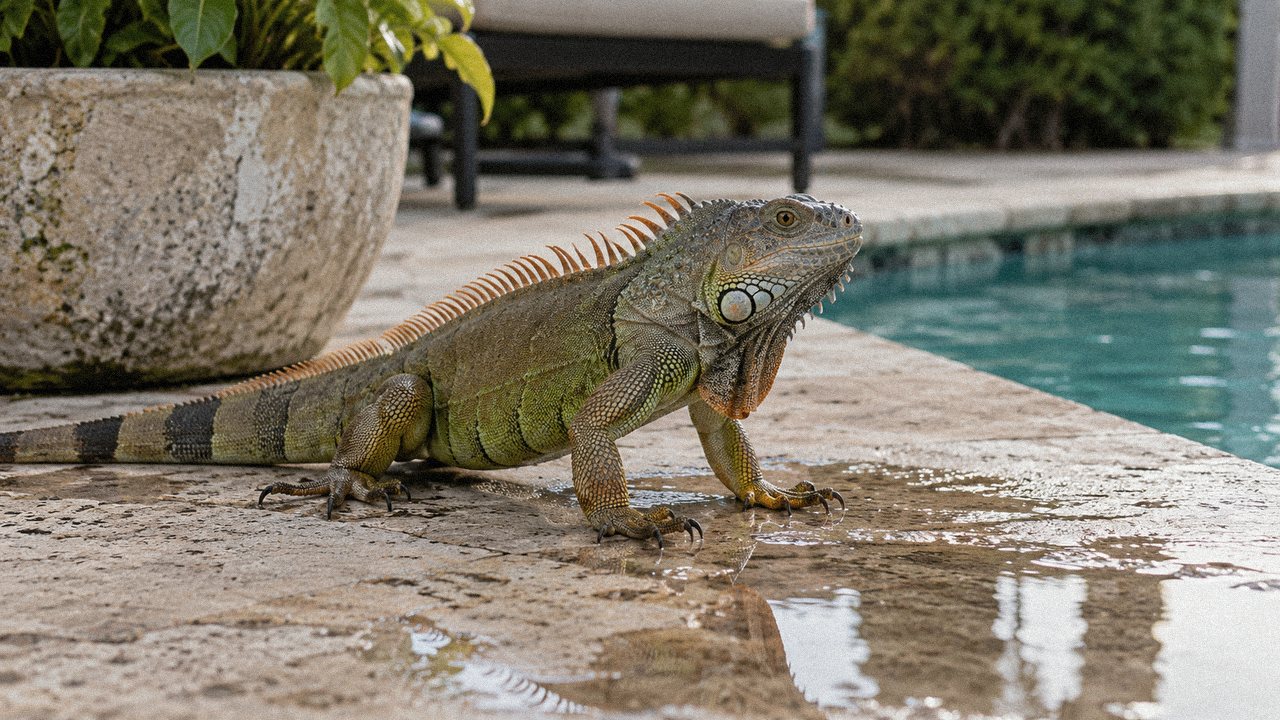
You do not have to touch an iguana to be exposed. Wild green iguanas in South Florida leave droppings where they bask and feed, and the FWC lists docks, boats, seawalls, porches, decks, pool platforms and the inside of pools as places waste accumulates. UF/IFAS adds that piles of droppings also cause odor complaints.
Common exposure routes:
- Hands to mouth. Touching a contaminated railing, lounge chair, toy or boat cushion, then eating or touching your face.
- Pool and dock water. Droppings that fall into a pool or collect on a swim platform.
- Children and pets. Kids crawl and play on decks; dogs sniff, lick and sometimes eat droppings or catch young iguanas.
- Gardens. Iguanas feed on vegetables, fruit and flowers and leave waste behind, so wash produce from the garden well.
- Bites and scratches. The CDC notes that reptile bites and scratches can spread germs.
| Risk | How it reaches people | What to do |
|---|---|---|
| Salmonella from droppings | Contaminated decks, docks, pools, furniture and hands | Clean with gloves, wash hands, keep kids and pets away |
| Salmonella from handling | Touching a live or dead iguana | Do not handle iguanas; wash hands immediately if you do |
| Other reptile germs | The CDC also lists Aeromonas and Mycobacterium marinum infections among diseases reptiles and amphibians can spread | Wash hands and cover cuts when cleaning reptile-soiled areas |
| Bites, scratches and tail strikes | Cornering or grabbing an adult | Leave capture to professionals; clean wounds right away |
You may read online that iguanas spread botulism or leptospirosis. Health and wildlife agency guidance on iguanas focuses on Salmonella, and we did not find official guidance naming wild iguanas as a source of those diseases, so focus your precautions on droppings, hands and bites.
Need help with pests in South Florida?
Toro Pest Management has protected homes and businesses since 1969. Get a free inspection and $25 off your first service, backed by our 110% Satisfaction Guarantee: if the pests come back, so do we, at no extra cost.
Who Is Most at Risk From Iguana Germs?
The CDC identifies these groups as more likely to get sick from germs reptiles carry:
- Children under 5
- Adults 65 and older
- People with weakened immune systems
Young children are also the most likely to touch contaminated surfaces and put their hands in their mouths. If your family includes a baby or toddler and iguanas use your pool deck or dock, cleaning and prevention are not optional.
Symptoms to Watch For
According to the CDC, Salmonella infection usually causes watery diarrhea, which may contain blood or mucus, and stomach cramps that can be severe. Some people also have headache, nausea, vomiting or loss of appetite. Symptoms usually begin 6 hours to 6 days after infection and last 4 to 7 days. Dehydration can develop quickly in young children.
How to Clean Up Iguana Droppings Safely
- Put on disposable gloves and closed shoes before you start.
- Pick up solid droppings with a scoop or paper towels and bag them for the trash. Avoid blasting dry droppings with a pressure washer, which spreads material around.
- Scrub the surface with hot, soapy water, then rinse. If you use a household disinfectant, follow its label exactly and never mix cleaning products.
- Clean the pool. Net out droppings, and keep swimmers out until the pool is clean and sanitized as usual.
- Wash your hands with soap and running water when you finish, even if you wore gloves. The CDC suggests hand sanitizer with at least 60% alcohol only when soap and water are not available.
- Change clothes before holding a baby or young child.
Keep children’s toys, pet bowls and outdoor dining areas away from spots iguanas use. The CDC’s advice for pet reptiles applies to wild ones too: keep reptiles and anything they have touched out of places where food is prepared or eaten.
Stopping the Source: Fewer Iguanas, Less Risk
Cleaning handles today’s mess. The lasting fix is giving iguanas fewer reasons to stay. The FWC recommends removing the plants that attract them, filling holes to discourage burrowing and humane harassment such as spraying them with water, hanging wind chimes and hanging reflective CDs. UF/IFAS adds a firm rule: never feed iguanas, because feeding draws more of them, along with rats and raccoons.
Our companion guides go deeper:
- What iguanas are afraid of and which scare tactics actually work
- Our green iguana profile covers identification, burrows and seawall damage
Do not try to grab or corner a large iguana. UF/IFAS warns that adults can bite, scratch with very sharp claws and slap with a powerful tail when cornered or caught.
Legal Removal and When to Call a Professional
Green iguanas are invasive in Florida and protected only by anti-cruelty law. The FWC encourages landowners to remove them, allows humane removal on private property year-round with the landowner’s permission, and prohibits relocating captured iguanas anywhere else in Florida. UF/IFAS notes that no poisons are registered or legal for iguanas or any reptile in Florida.
If iguanas leave droppings around your pool, dock or patio every day, professional help is usually faster and safer than doing it yourself. Toro’s wildlife control service in Miami-Dade starts with a free inspection to find where iguanas bask, feed and burrow, then uses humane trapping and removal methods allowed under FWC rules, along with advice on keeping new ones away. Toro has protected South Florida properties since 1969 and responds within 24 hours, guaranteed. Condo associations and HOAs with shared pools and waterfronts can ask about our property management programs.

Contact Toro today
A free inspection & $25 off your first service
A trained Toro technician inspects your home or business, explains what was found and gives you a clear plan and quote, backed by our 110% Satisfaction Guarantee.
305-594-4767Frequently Asked Questions
Can you get sick from touching an iguana?
Is it safe to swim in a pool where an iguana pooped?
Can my dog get sick from iguanas?
What are the symptoms of Salmonella infection?
Do iguana bites need medical attention?
Sources
- Green Iguana, Florida Fish and Wildlife Conservation Commission
- Reptiles and Amphibians, Centers for Disease Control and Prevention
- Symptoms of Salmonella Infection, Centers for Disease Control and Prevention
- Reptile-Associated Salmonellosis, Selected States, 1998-2002, Centers for Disease Control and Prevention
- Prevalence of fecal shedding of Salmonella organisms among captive green iguanas and potential public health implications, Journal of the American Veterinary Medical Association (PubMed)
- Dealing with Iguanas in the South Florida Landscape, UF/IFAS Extension
Educational content. This article is for general information about pests in South Florida and is not medical, legal or professional advice. If you have a bite, sting or allergic reaction, contact your doctor; in an emergency, call 911. Pest problems vary from home to home, so a licensed professional should inspect before treatment. When using any pesticide, always read and follow the product label.