
Key takeaways
- Fire ants feed on seedlings, transplants, okra buds and pods and tunnel into potatoes, with the worst damage in hot, dry weather.
- Most garden fire ants come from mounds in the surrounding lawn, so treating the lawn around the beds protects the garden.
- Use only products whose label lists vegetable gardens and your crop, and respect the pre-harvest interval on the label.
- Baits work slowly but reach the queen; one well-timed application can cut populations by around 80% (Clemson Extension).
- Club soda, grits, soap, wood ashes and shoveling mounds together do not control fire ants, according to UF/IFAS.
In this article
Fire ants hurt a garden in two ways: they feed on seedlings and some crops, and they sting the gardener every time a trowel hits a hidden mound. The most effective protection is to control fire ants in the lawn around your beds, use only products labeled for the plants you grow, and time treatments for when the ants are actually feeding.
South Florida gardens are ideal fire ant habitat. Sunny raised beds, irrigated soil, compost and year-round growing seasons give them food and shelter in every month. The good news is that garden-friendly control is well studied. This guide covers why fire ants move into gardens, what damage to expect, which methods work near food plants and which popular tricks to skip.
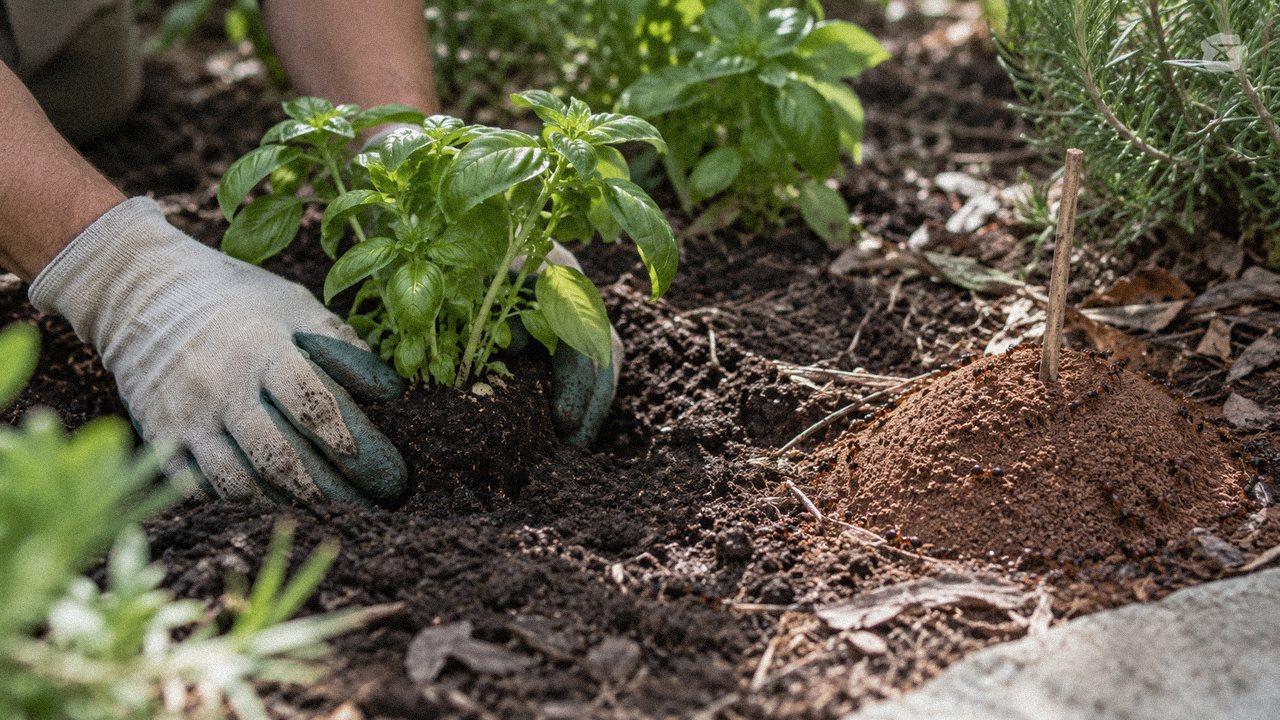
Why Fire Ants Move Into Gardens
Fire ants are omnivores. They eat plants, insects, sugars and oils, and gardens offer all four. Several garden features draw them in:
- Sun and open soil. Fire ants prefer sunny, open areas, and freshly worked beds are easy to nest in.
- Higher ground after storms. UF/IFAS notes that after heavy rain, colonies may move to higher ground to escape saturated soil, and raised beds are exactly that.
- Insects and honeydew. Workers eat insects and collect honeydew from plant-feeding insects, according to UF/IFAS.
- Shelter. Pots, pavers, landscape timbers and stones give colonies cover.
- The lawn next door. Clemson Extension notes that most fire ants in a vegetable garden come from mounds in the adjacent lawn.
Foragers travel far. UF/IFAS Gardening Solutions reports that workers forage more than 100 feet from the nest, so a mound along the fence line can feed on your tomato bed.
What Damage Fire Ants Do to Plants
Fire ant damage in the garden is real but targeted. According to Clemson Extension and Texas A&M AgriLife:
- Seedlings and transplants. In dry conditions, fire ants feed on the stems of tender young plants.
- Okra. They feed on okra buds and developing pods.
- Potatoes. They tunnel into Irish potatoes underground.
- Young growth of other crops. UF/IFAS reports that fire ants feed on the young growth of many crops.
Texas A&M notes that damage is usually worst in hot, dry weather. For a gardener, though, the bigger problem is often the stings: weeding, planting or harvesting near a hidden mound brings a stream of ants up the hands and arms. The sting burns, forms a pustule within a day or two and can stay itchy for up to 10 days, according to UF/IFAS. For tips on protecting the family members who share the yard, see safeguarding your loved ones from fire ant bites.
Need help with pests in South Florida?
Toro Pest Management has protected homes and businesses since 1969. Get a free inspection and $25 off your first service, backed by our 110% Satisfaction Guarantee: if the pests come back, so do we, at no extra cost.
Garden Fire Ant Myths to Skip
Many home remedies circulate in gardening groups. The research does not support them:
- Club soda, grits, soap and wood ashes: UF/IFAS Gardening Solutions lists these among methods that do not work.
- Shoveling one mound onto another: the colonies do not destroy each other.
- Spraying the ants you see: only about 20% of a colony forages at a time, so the rest of the colony is untouched.
- Repeatedly kicking or disturbing mounds: the colony usually relocates rather than dies.
- Gasoline or petroleum products: UF/IFAS guidance warns that gasoline is flammable, harms grass and soil and often just makes the colony move.
Garden-Safe Habits That Make Beds Less Inviting
These habits reduce mounds in and around beds and make them easier to spot:
| Garden habit | Why it helps |
|---|---|
| Inspect beds and edges weekly, especially after rain | Colonies relocate after heavy rain, often to higher ground |
| Keep the lawn around the garden under control | Most garden fire ants come from adjacent lawn mounds |
| Lift pots, pavers and timbers when you work | Colonies hide under objects on the ground |
| Keep compost in a closed bin away from the beds | Food scraps attract foragers |
| Fix drainage and avoid waterlogged spots | Saturated soil pushes colonies to raised beds and higher ground |
| Wear gloves, closed shoes and long sleeves | Prevents stings while weeding and harvesting |
| Manage aphids and other sap feeders | Reduces the honeydew that fire ants collect |
Pick up dropped fruit and keep pet food out of the yard; fire ants seek out sweets, proteins and fats.
How to Treat Fire Ants in a Vegetable Garden
Treating near food plants calls for more care than treating a lawn. Three rules come first:
- Read the label. Texas A&M advises never using a product in your vegetable garden unless that site is listed on the label, and Clemson notes that some fire ant mound treatments are labeled for lawns but not for vegetables.
- Respect the pre-harvest interval. The label states how many days must pass between treatment and harvest for each crop.
- Treat the perimeter. Where a product cannot be used in the garden, treat the lawn and landscape around it so fewer ants reach the beds.
Baits
Clemson Extension calls broadcast baiting the most effective way to manage fire ants in a vegetable garden. Workers carry the bait to the colony and feed it to the queen and the brood. Some baits, such as certain spinosad products, are labeled for home vegetable gardens, and UF/IFAS Leon County Extension notes spinosad is effective on fire ant populations. Baits are slow: Clemson reports it takes two to three weeks to see results.
Source: Clemson HGIC; UF/IFAS EDIS LH059
Timing Bait So Ants Take It
Bait only works if foragers pick it up. The extension guidance agrees on a few points:
- Apply when ants are foraging, on sunny days above about 65°F, as Clemson notes; in midsummer heat, late afternoon or early evening works best, according to UF/IFAS.
- Apply only when the ground and grass are dry and no rain is expected.
- Use fresh bait; ants reject stale or rancid bait.
- Test first: scatter a few greasy potato chips near a mound. If ants find them within 20 to 30 minutes, they are foraging.
- Do not mix bait with fertilizer or seed unless the label gives directions for it.
- Spring is usually the best time for garden baits, with a fall application where activity is heavy.
Mound Treatments
If individual mounds persist after baiting, Clemson notes they can be treated one at a time with products labeled for that use, which work faster on the mound they reach. Always confirm the product is labeled for vegetable gardens before using it near crops.
Protect Native Ants
UF/IFAS Gardening Solutions points out that native, non-pest ants are one of the best biological controls for fire ants, so control methods should not kill all ants. Targeted treatments help those competitors stay in your yard.
When to Bring in a Professional
Call a professional when mounds keep returning to the same beds, when stings make the garden unpleasant to work in, when fire ants appear around irrigation controllers, pool equipment or electrical boxes, or when the problem spans the whole lawn. UF/IFAS states that no method permanently eliminates fire ants from an area, so a program with follow-up usually beats one-time fixes.
Toro’s lawn spray service starts with a free inspection to identify the insects in your lawn and the conditions, like overwatering, that invite them back. You get a detailed report and a control and prevention program built for your landscape, treatment with power lawn sprays and granules, and follow-up visits. Ask about residential product options made from plant oils such as peppermint, wintergreen and rosemary, applied according to the label. Treating the lawn around your beds cuts down the number of ants that reach your vegetables.
Toro has protected South Florida yards since 1969, and if the bugs come back, so will Toro, at no additional cost to you. For identification photos and seasonal activity, see our red imported fire ant page, and for the biology behind these methods, read Fire Ants 101.

Contact Toro today
A free inspection & $25 off your first service
A trained Toro technician inspects your home or business, explains what was found and gives you a clear plan and quote, backed by our 110% Satisfaction Guarantee.
305-594-4767Frequently Asked Questions
Are fire ants good for the garden?
Will fire ants kill my plants?
Can I use regular fire ant bait in my vegetable garden?
Do fire ants hurt fruit trees?
Does mulch attract fire ants?
Sources
- Managing Fire Ants in the Vegetable Garden, Clemson Cooperative Extension, Home & Garden Information Center
- Fire Ants in the Garden, UF/IFAS Extension Leon County
- Managing Imported Fire Ants in Urban Areas, UF/IFAS Extension
- Fire Ants, UF/IFAS Gardening Solutions
- Managing Fire Ants for Specific Sites, Texas A&M AgriLife, Texas Imported Fire Ant Research and Management Project
- Red Imported Fire Ant, Solenopsis invicta Buren, UF/IFAS Extension
Educational content. This article is for general information about pests in South Florida and is not medical, legal or professional advice. If you have a bite, sting or allergic reaction, contact your doctor; in an emergency, call 911. Pest problems vary from home to home, so a licensed professional should inspect before treatment. When using any pesticide, always read and follow the product label.


