
Key takeaways
- Only blacklegged (deer) ticks spread Lyme disease in the eastern U.S.; lone star, American dog and brown dog ticks cannot transmit it (CDC).
- The CDC says blacklegged ticks in most of the southeastern United States are almost never infected with the Lyme bacterium.
- Florida reported between 115 and 216 Lyme cases a year from 2011 to 2020, and many patients were infected outside the state.
- In most cases a tick must be attached for more than 24 hours to transmit Lyme bacteria, so removing ticks quickly matters.
- About 70 to 80 percent of infected people develop an expanding rash 3 to 30 days after the bite.
In this article
- Can You Get Lyme Disease in South Florida?
- Which Ticks Can and Cannot Spread Lyme
- How Lyme Disease Spreads From Tick to Person
- Signs and Symptoms of Lyme Disease
- How Lyme Disease Is Treated
- How to Prevent Lyme Disease at Home and on the Road
- Reducing Ticks Around Your South Florida Home
- Frequently Asked Questions
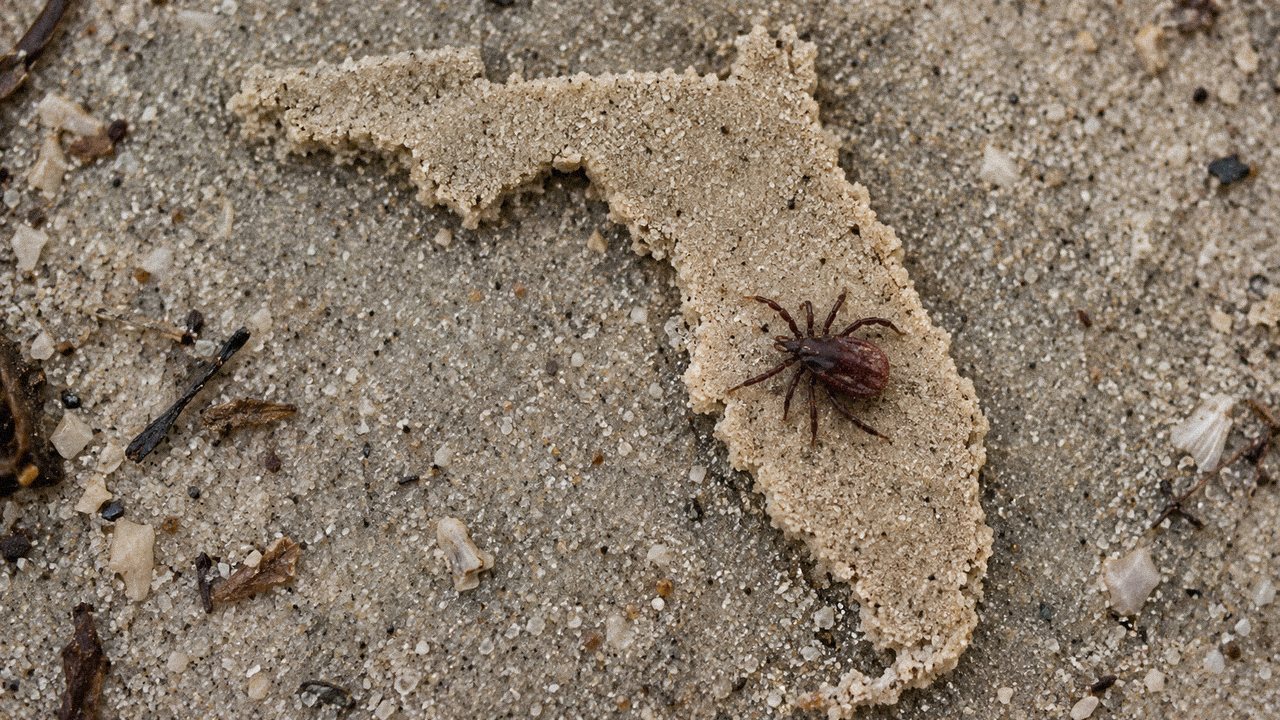
Lyme disease is uncommon in South Florida, but the risk is not zero. Only the blacklegged (deer) tick spreads it in the eastern United States, and the CDC notes that blacklegged ticks in most of the Southeast are almost never infected, so a tick bite in Miami-Dade, Broward or Palm Beach is far less likely to cause Lyme than one in Connecticut or Wisconsin.
That does not mean you can ignore it. Florida still reports Lyme cases every year, some of them acquired in the state, and many South Floridians travel to high-risk regions in summer. Other ticks here spread different illnesses, and one of them causes a rash that looks a lot like Lyme’s.
This guide explains why Lyme is rare in South Florida, how the disease spreads, which symptoms to watch for, how it is treated and how to protect yourself at home and on the road.
Can You Get Lyme Disease in South Florida?
You can, but it is unusual. The bacterium that causes Lyme disease, Borrelia burgdorferi, reaches people only through the bite of an infected blacklegged tick. According to the CDC, infected ticks are found most commonly in forested areas of the northeastern, north-central and mid-Atlantic states, and blacklegged ticks found in most areas of the southeastern United States are almost never infected.
Several things work against Lyme in Florida:
- Lizards break the cycle. UF/IFAS Extension explains that Florida’s blacklegged ticks feed on the state’s large population of reptiles and lizards, which are not reservoirs for the disease. A young tick that feeds on a lizard instead of a mouse is less likely to pick up the bacterium.
- Many cases come from elsewhere. The CDC records Lyme cases by where a person lives, not where they were bitten, and UF/IFAS reports that only about 30% of Florida cases reported from 1999 to 2008 were acquired in Florida.
Florida’s statewide numbers stay modest:
Source: Florida Department of Health, Annual Morbidity Statistics Report 2019/2020
For comparison, UF/IFAS notes that in 2010 Florida reported 56 confirmed cases while many northeastern states reported more than 4,000.
Which Ticks Can and Cannot Spread Lyme
Most ticks that bite South Floridians cannot transmit Lyme at all. The CDC states plainly that lone star, American dog, Rocky Mountain wood and brown dog ticks are not able to transmit Lyme disease bacteria, although they can spread other illnesses.
| Tick | Can it transmit Lyme? | What else to know |
|---|---|---|
| Blacklegged (deer) tick | Yes | In Florida it feeds heavily on lizards and reptiles; nymphs are about the size of a poppy seed |
| Lone star tick | No | The most common human-biting tick in Florida; linked to ehrlichiosis and STARI, a Lyme-like rash |
| American dog tick | No | The main transmitter of Rocky Mountain spotted fever in Florida |
| Brown dog tick | No | Feeds mainly on dogs and can infest homes and kennels |
The lone star tick deserves a special note. Its bite can cause southern tick-associated rash illness (STARI), and the CDC points out that the STARI rash can resemble the Lyme rash even though it is not Lyme disease. Either way, a spreading rash after a tick bite needs a doctor’s evaluation. For the full list of local illnesses, see how to protect your family from tick-borne illnesses in South Florida. Photos of each species are in our tick identification guide.
Need help with pests in South Florida?
Toro Pest Management has protected homes and businesses since 1969. Get a free inspection and $25 off your first service, backed by our 110% Satisfaction Guarantee: if the pests come back, so do we, at no extra cost.
How Lyme Disease Spreads From Tick to Person
A blacklegged tick becomes infected by feeding on an infected animal and can pass the bacterium on at a later meal. Our article on how ticks get Lyme disease explains that cycle in detail.
What matters most for your protection is timing. The CDC says that in most cases a tick must be attached for more than 24 hours before the Lyme bacterium can be transmitted, and that removing a tick within 24 hours can greatly reduce the chance of infection. That window is why daily tick checks work so well.
Nymphs are the stage to watch. The CDC describes them as a particularly high risk because of their abundance and small size: at about the size of a poppy seed, a nymph can feed unnoticed for the hours it needs. Adult females can also spread the bacterium, but they are larger and easier to spot and remove.
The CDC adds that there is no evidence Lyme disease spreads from person to person through touching, kissing or sex, and no transmission through breast milk or blood transfusion has been reported.
Signs and Symptoms of Lyme Disease
Lyme disease develops in stages, and early treatment is easiest. According to the CDC:
Early Signs (3 to 30 Days After the Bite)
- Erythema migrans (EM) rash in about 70 to 80 percent of infected people. It appears 3 to 30 days after the bite, about 7 days on average, and expands over several days, reaching 12 inches (30 cm) or more across.
- The rash may feel warm but is rarely itchy or painful. It sometimes clears in the center to form a bull’s-eye, but often it does not look like a classic target, and it can appear anywhere on the body.
- Flu-like symptoms, with or without the rash: fever, chills, headache, fatigue, muscle and joint aches and swollen lymph nodes.
Later Signs (Days to Months After the Bite)
- Severe headaches and neck stiffness
- Additional EM rashes on other parts of the body
- Facial palsy, a drooping of one or both sides of the face
- Arthritis with severe joint pain and swelling, especially in the knees
- Heart palpitations or an irregular heartbeat (Lyme carditis)
- Dizziness or shortness of breath
- Nerve pain, numbness or tingling in the hands or feet
How Lyme Disease Is Treated
Lyme disease is treated with antibiotics. The CDC lists doxycycline, amoxicillin and cefuroxime axetil as the commonly used drugs, and says early treatment usually leads to rapid and complete recovery. Most people recover completely with a 2- to 4-week course of oral antibiotics.
Some people still feel unwell after treatment. The CDC calls this post-treatment Lyme disease syndrome (PTLDS): prolonged fatigue, body aches or difficulty thinking. Its cause is unknown, and similar symptoms have been reported after other infections. People with these symptoms usually get better over time without more antibiotics, though it can take many months.
Longer courses of antibiotics are not the answer. According to the CDC, careful studies in the United States and Europe have generally found extended antibiotic treatment no better than placebo for prolonged symptoms, and long-term antibiotic use has been linked to serious, even deadly, complications such as sepsis.
How to Prevent Lyme Disease at Home and on the Road
The best defense against Lyme disease is preventing tick bites. The CDC recommends:
- Use an EPA-registered repellent containing DEET, picaridin, IR3535, oil of lemon eucalyptus, para-menthane-diol or 2-undecanone, following the label.
- Treat clothing and gear with 0.5% permethrin.
- Shower soon after time outdoors and check your body daily, especially the armpits, behind the knees, the hair and the groin.
- Dry clothes on high heat for 10 minutes to kill ticks you carried in. Our article on how long ticks live on clothing explains why the dryer works.
- Protect pets with tick preventives, check them daily and ask your veterinarian about a Lyme vaccine for dogs.
At home, the CDC suggests removing leaf litter, clearing tall grass and brush, placing a 3-foot strip of wood chips or gravel between wooded areas and the lawn and keeping a 9-foot lawn buffer before patios, gardens and play sets.
If you find an attached tick, remove it right away and watch the bite for several weeks. Step-by-step instructions are in what to do if you get bitten by a tick, and local seasons and hot spots are in how to avoid ticks in South Florida.
Reducing Ticks Around Your South Florida Home
Even though Lyme is rare here, the ticks in South Florida yards still carry other diseases and bother pets. Keeping your property open, sunny and free of leaf litter and brush lowers the number of ticks your family meets.
When ticks keep showing up on your dog or your children after time in the yard, Toro’s lawn spray service can help. It begins with a free inspection to identify the pests in your lawn and the conditions that attract them, then uses power lawn sprays and granules and comes back to check the results. Toro has been protecting South Florida since 1969 and offers $25 off the first service.
Contact Toro today
A free inspection & $25 off your first service
A trained Toro technician inspects your home or business, explains what was found and gives you a clear plan and quote, backed by our 110% Satisfaction Guarantee.
305-594-4767Frequently Asked Questions
Is Lyme disease common in Florida?
Can a lone star tick give you Lyme disease?
How long does a tick have to be attached to transmit Lyme disease?
Does every Lyme rash look like a bull's-eye?
Can Lyme disease be cured?
Sources
- How Lyme Disease Spreads, Centers for Disease Control and Prevention
- Signs and Symptoms of Untreated Lyme Disease, Centers for Disease Control and Prevention
- Chronic Symptoms and Lyme Disease, Centers for Disease Control and Prevention
- Lyme Disease: What You Need to Know, Centers for Disease Control and Prevention
- Ticks & Disease in Florida, UF/IFAS Extension
- Florida Annual Morbidity Statistics Report 2019/2020: Appendices, Florida Department of Health
Educational content. This article is for general information about pests in South Florida and is not medical, legal or professional advice. If you have a bite, sting or allergic reaction, contact your doctor; in an emergency, call 911. Pest problems vary from home to home, so a licensed professional should inspect before treatment. When using any pesticide, always read and follow the product label.


