
Key takeaways
- Bed bugs always come from another infestation: they are carried in on luggage, clothing, bedding, furniture or bags.
- Dirt does not cause bed bugs; the CDC says they turn up in high-end hotels and clean homes alike.
- A single mated female carried into a home can start an infestation on her own (Virginia Cooperative Extension).
- Bed bugs nearly vanished after DDT and have been rising again since about 1995, helped by travel and pesticide resistance.
- They find you through the carbon dioxide you exhale, then body heat at close range.
In this article
Bed bugs come from other infested places. They do not appear out of dirt, old houses or damp weather; they are carried into your home by people, hidden in luggage, clothing, bedding, bags and furniture that spent time near an infested bed. Every new infestation starts with bugs, or eggs, moved from somewhere else.
That is good news in one way: if you know the routes, you can close most of them. This guide covers where bed bugs came from in the first place, why they are back in force, the most common ways they enter a South Florida home and the myths that send people looking in the wrong direction.
Where Bed Bugs Originally Came From
Bed bugs are ancient. An international study published in Current Biology found that bed bugs have lived as parasites of other species for more than 100 million years, and the University of Sussex, one of the institutions involved, reported that bed bugs are older than bats, which scientists had long thought were their first hosts. The two species that bite people today, the common bed bug and the tropical bed bug, are far older than our own species.
Their relatives still live with other animals. UF/IFAS lists human dwellings, bird nests and bat caves as the most suitable habitats, because each offers warmth, hiding places and a steady host. The common bed bug feeds on people, chickens, bats and occasionally domestic animals.
Why Bed Bugs Came Back
For several decades, bed bugs were rare in the United States. UF/IFAS explains that infestations nearly disappeared after modern insecticides such as DDT came into use. Since about 1995, pest management professionals have reported a steady rise in complaints, including from upscale hotels and private homes.
Two forces keep them coming back. Travel moves them from place to place, and resistance makes them harder to kill: Virginia Cooperative Extension reports that practically all natural bed bug populations collected in Virginia were at least somewhat resistant to pyrethroids, a widely used class of insecticides. For the local side of the story, read our article on the rise of bed bugs in South Florida.
How Bed Bugs Get Into Your Home
Bed bugs cannot fly or jump, and UF/IFAS notes that they cannot cling to hair, fur or feathers. They move by crawling, and over long distances they depend on our belongings. The CDC says they travel in the seams and folds of luggage, overnight bags, folded clothes, bedding and furniture, and that most people do not know they are carrying them.
| Route into the home | How it happens | Risk level |
|---|---|---|
| Travel | Bugs crawl into luggage or clothing in a hotel, rental, cruise cabin or dorm | High |
| Used furniture and mattresses | Bugs and eggs hide in seams, joints and frames of secondhand beds, couches and headboards | High |
| Guests and visitors | Bags, coats and overnight luggage come from an infested home | Moderate |
| Shared walls in apartments and condos | Bugs move between units through wall voids, outlets and hallways | Moderate to high in multi-unit buildings |
| Bags left on beds or sofas elsewhere | Coats, backpacks and purses left on a friend’s bed or recliner | Moderate |
| Shared laundry | Clothing carried unbagged to and from shared machines | Lower, but real |
| Bedding moved between places | Sleeping bags, nap mats and blankets taken to childcare, school or shelters and back | Moderate |
The last three routes come straight from University of Arizona Cooperative Extension, which warns against leaving coats, backpacks and purses on beds or upholstered furniture in homes that may have bed bugs, and against moving bedding between homes, childcare facilities, schools, hotels or shelters. Our article on how bed bugs travel goes deeper into each route.
Travel Is the Big One
The CDC notes that people who travel often and share sleeping spaces where others have slept face a higher risk. Bed bugs have been found in hotels and resorts, cruise ships, buses, trains, dorms, apartments and shelters. For a step-by-step plan, see our traveler’s alert on avoiding bed bugs.
Secondhand Furniture
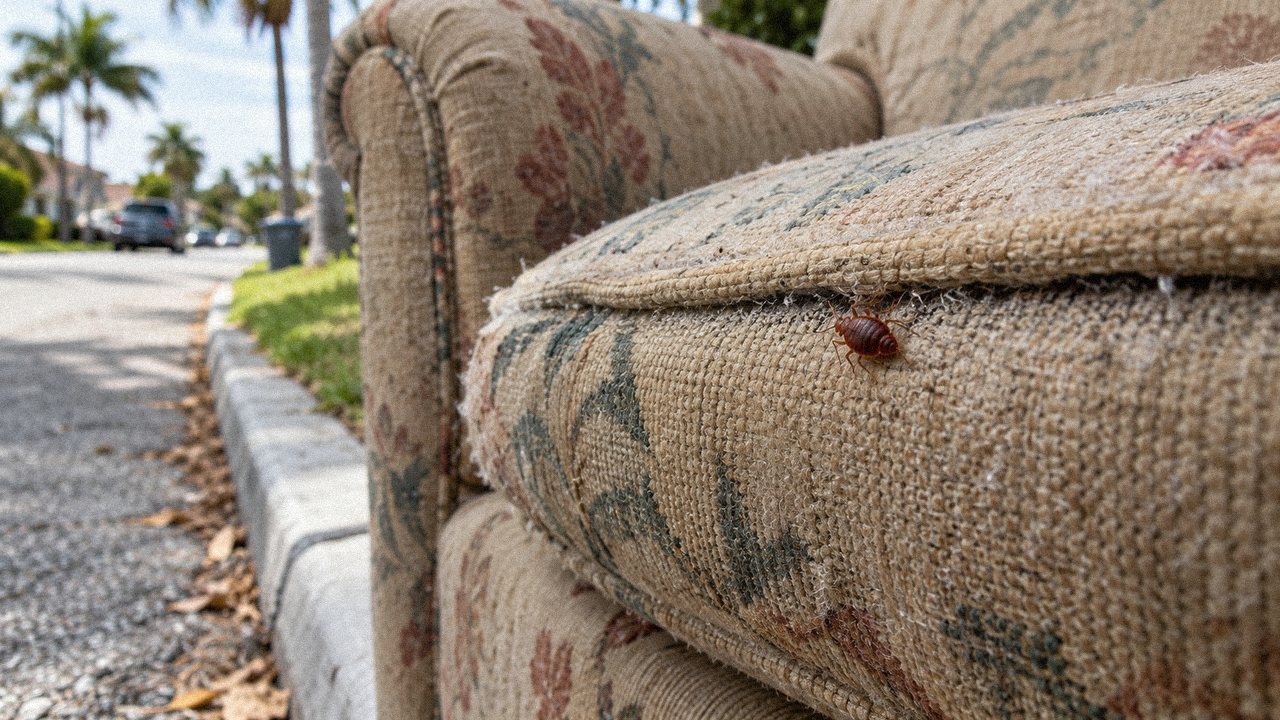
A used mattress, couch or headboard can carry a whole colony, eggs included. Inspect with a flashlight along every seam, joint and screw hole before anything enters your home, and be especially cautious with free furniture left on the curb.
Need help with pests in South Florida?
Toro Pest Management has protected homes and businesses since 1969. Get a free inspection and $25 off your first service, backed by our 110% Satisfaction Guarantee: if the pests come back, so do we, at no extra cost.
Bed Bugs and Cleanliness: The Biggest Myth
Bed bugs do not come from dirt, garbage or poor housekeeping. They feed only on blood. The CDC notes that they have been found in high-end hotels and resorts and that cleanliness does not determine whether bed bugs are present. UF/IFAS makes a similar point: infestations have turned up in upscale hotels and private homes, and good sanitation is a first step but not always enough.
Clutter matters in a different way. It does not attract bed bugs, but it gives them more places to hide and makes an infestation harder to find and treat. A tidy bedroom is easier to inspect, not immune.
What About Color?
You may read that bed bugs favor dark red or black furniture. There is a grain of truth: a 2016 study by researchers from the University of Florida and Union College found that adult bed bugs in the lab preferred red and black shelters and avoided green and yellow ones, according to Entomology Today. But the co-author said applying the results to sheets would be “stretching the results a little too much.” Choosing a light-colored sofa makes bugs easier to see; it does not keep them away.
What Draws Bed Bugs to People
Once bed bugs are inside, they find you through the signals you give off while you sleep. According to Virginia Cooperative Extension:
- Carbon dioxide in your breath triggers hungry bugs to start searching.
- Body heat helps them close in, but only from less than about 3 feet away.
- They are most active between midnight and 5 a.m.
- A feeding takes about 5 to 10 minutes, and bed bugs typically feed every 3 to 7 days.
That is why bed bugs settle in mattress seams, headboards and nightstands. The CDC says they usually stay within about 8 feet of where people sleep. When they spread farther, they turn up in surprising spots, which we list in 6 unusual bed bug hiding places.
How One Bed Bug Becomes an Infestation
You do not need to bring home a crowd. Virginia Cooperative Extension notes that a single mated female carried into a home can start an infestation on her own. She produces about 1 to 7 eggs a day for roughly 10 days after a blood meal, and about 140 in her lifetime.
Under warm conditions, between about 70°F and 90°F with a host present, a population can double about every 16 days, and a bed bug can go from egg to adult in about 37 days. Air-conditioned South Florida homes sit right in that range all year, which we cover in why bed bugs are thriving in South Florida’s climate.
How to Stop Bed Bugs Before They Move In
Most prevention comes down to controlling what enters your home:
- Inspect hotel and rental beds before unpacking, and keep luggage off beds and floors.
- Unpack travel clothing straight into the dryer on high heat when you get home.
- Inspect secondhand furniture outside before bringing it in.
- Bag laundry going to and from shared machines.
- Keep coats and bags off beds and sofas when visiting.
- Use mattress and box spring encasements, which remove many hiding spots and make bugs easier to see.
- In apartments and condos, seal cracks around baseboards and outlets, and report bed bugs to the property manager early.
Found Bed Bugs? Get an Inspection
The sooner bed bugs are confirmed, the easier they are to eliminate. Toro’s bed bug control service starts with a free inspection to confirm whether you really have bed bugs and rule out look-alikes such as fleas, followed by a clear plan, preparation instructions and a quote before any work begins. Toro has protected South Florida homes and businesses since 1969, and if the bugs come back, so will Toro, at no additional cost to you. To learn more about the insect itself, visit our bed bug pest library.

Contact Toro today
A free inspection & $25 off your first service
A trained Toro technician inspects your home or business, explains what was found and gives you a clear plan and quote, backed by our 110% Satisfaction Guarantee.
305-594-4767Frequently Asked Questions
Can bed bugs come from outside?
Can pets bring bed bugs into the house?
Do bed bugs come from mattresses?
Can you get bed bugs from a movie theater or bus seat?
How quickly do bed bugs spread after they arrive?
Sources
- About Bed Bugs, Centers for Disease Control and Prevention
- Bed Bug, Cimex lectularius Linneaus (Insecta: Hemiptera: Cimicidae), UF/IFAS Extension (EDIS EENY-140/IN297)
- Bed Bug Biology and Behavior, Virginia Cooperative Extension, Virginia Tech (ENTO-8P)
- Bed Bugs, University of Arizona Cooperative Extension (AZ1625)
- International research finds bedbugs evolved more than 100 million years ago - and walked the earth with T.Rex, University of Sussex
- Adult Bed Bugs Prefer Red and Black, But Avoid Yellow and Green, Entomology Today, Entomological Society of America
Educational content. This article is for general information about pests in South Florida and is not medical, legal or professional advice. If you have a bite, sting or allergic reaction, contact your doctor; in an emergency, call 911. Pest problems vary from home to home, so a licensed professional should inspect before treatment. When using any pesticide, always read and follow the product label.


