
Key takeaways
- Mosquitoes that bite you at home usually hatched nearby: the Aedes species that bite by day fly only a few blocks in their lifetime (CDC).
- If bites continue after two or three weeks of weekly draining and scrubbing, you are likely missing a breeding or resting site.
- Daytime bites point to container breeders like the Asian tiger mosquito; bites after dark point to Culex mosquitoes from drains and ditches.
- UF/IFAS expects mosquito numbers to rise about two weeks after major rainfall, so a sudden spike after storms is normal but treatable.
- In Miami-Dade, county mosquito control inspects on request through 311; a private service treats your own property between county visits.
In this article
- Why Some South Florida Yards Have So Many Mosquitoes
- 7 Signs It’s Time for Professional Mosquito Control
- Quick Self-Check Before You Call
- What You Can Keep Doing Yourself
- What a Professional Mosquito Inspection Looks For
- How Toro’s Mosquito Control Works
- Professional Service and County Mosquito Control
- Frequently Asked Questions
It is time to call a professional when mosquitoes keep you from using your yard even after you have spent two or three weeks draining and scrubbing every container you can find. At that point the source is usually something you cannot see or reach: a hidden breeding site, dense resting cover or water on a neighboring lot close enough for mosquitoes to fly in.
A few mosquitoes are part of life in South Florida. A patio you cannot sit on, a pool you avoid and kids who come inside covered in bites are not. This guide lists the signs that a yard has moved past do-it-yourself fixes, what you can still handle on your own and what a professional inspection looks for.
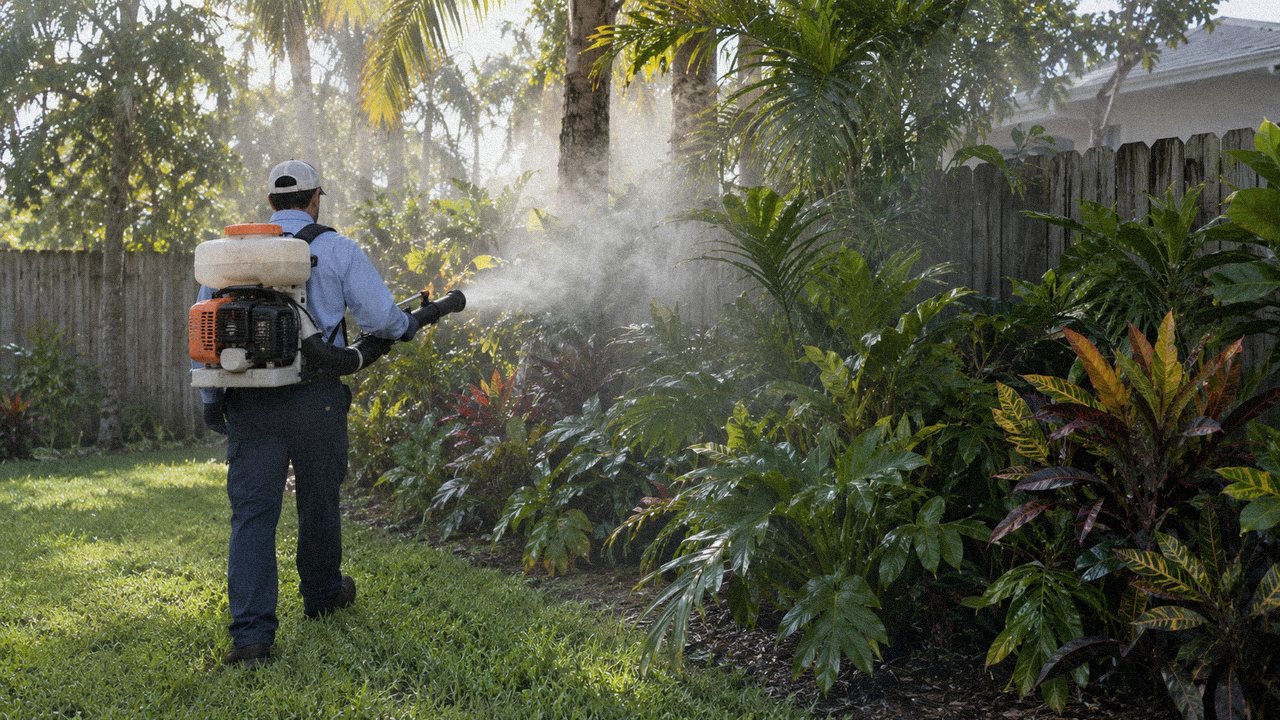
Why Some South Florida Yards Have So Many Mosquitoes
Mosquitoes need water to breed and shade to rest, and many South Florida yards offer both all year. Heat speeds up their development, and the rainy season, roughly May through October, refills every container and low spot.
Most of the mosquitoes biting you were born close by. The CDC says the yellow fever mosquito and the Asian tiger mosquito fly only a few blocks in their lifetime, and that they can go from egg to adult in 7 to 10 days. A clogged gutter or a stack of plant saucers on your property, or the yard next door, can keep producing new biters week after week.
Adults spend the day in cool, dark, humid places. The CDC lists spots such as under patio furniture, under carports and in garages, and dense shrubs and ground cover give them the same shelter. A yard with lots of shady landscaping close to where you sit gives mosquitoes a place to wait for you.
7 Signs It’s Time for Professional Mosquito Control
1. You Get Bitten Every Time You Step Outside
If mosquitoes find you within a minute or two of opening the back door, there is a sizable population resting nearby. Pay attention to the time of day. Bites in the daytime usually come from container breeders like the Asian tiger mosquito, which UF/IFAS describes as a daytime feeder with peaks in the early morning and late afternoon. Bites after dark usually come from Culex mosquitoes that breed in drains, ditches and other standing water.
2. Your Patio, Pool or Garden Has Become Off-Limits
When your family plans around mosquitoes, skipping dinner outside, cutting swim time short or avoiding the garden, the problem has moved past a nuisance. Repeated bites also raise the chance of a bite from a mosquito carrying a virus; our guide to the health risks of mosquito bites explains what is at stake.
3. Mosquitoes Keep Returning After You Remove Standing Water
Draining water is the right first step, but it only works if you find every source. Breeding sites hide in gutters, French drains, AC condensate lines, the cups of bromeliads, pool covers, boat tarps and toys under bushes. If you have handled the obvious containers for a few weeks and nothing has changed, the source is somewhere you have not looked, or it is next door.
4. Store-Bought Fixes Don’t Last
Citronella candles, foggers, zappers and backyard sprays may give brief relief in one spot, but they do not touch the water where the next generation is growing. UF/IFAS Extension notes that bug zappers have not been scientifically proven effective and kill many other insects besides mosquitoes. If you keep buying products and the yard keeps filling back up, you are treating symptoms. Automatic misters have the same limits, as we explain in the truth about mosquito misting systems.
5. Activity Spikes After Rain and Stays High
A jump in mosquitoes after a storm is expected. UF/IFAS Extension says mosquito populations usually increase about two weeks after major rainfall events, because that is how long development takes. What should concern you is a spike that never comes back down, which points to a breeding source that keeps refilling. Read more in why mosquito problems get worse after rain.
6. You Have Water You Can’t Drain
Ponds, fountains, rain barrels, bromeliad beds, drainage swales and catch basins cannot simply be dumped. Some can be treated with a Bti larvicide, which Miami-Dade County describes as a natural bacterium that kills only mosquito and black fly larvae. When there are several of these features, or they are hard to reach, a professional can treat them on a schedule.
7. Your Household Has a Higher Health Risk
Bring in help sooner if someone at home is pregnant, elderly or has a chronic illness, if a family member just came back sick from a trip to a dengue area, or if your county is under a mosquito-borne illness alert. In those cases fewer mosquitoes around the house is not just about comfort.
Need help with pests in South Florida?
Toro Pest Management has protected homes and businesses since 1969. Get a free inspection and $25 off your first service, backed by our 110% Satisfaction Guarantee: if the pests come back, so do we, at no extra cost.
Quick Self-Check Before You Call
Spend 20 minutes walking your property with this table. If you find and fix sources and the bites drop, great. If not, it is time for an inspection.
| Where to check | What you may find | What you can do | When it needs a pro |
|---|---|---|---|
| Containers, toys, saucers, buckets | Wigglers or tumblers in the water | Empty and scrub weekly, store upside down | Sources keep reappearing |
| Gutters and downspouts | Debris holding water | Clean before and during rainy season | High roofs or gutters you cannot reach safely |
| Bromeliads and ponds | Larvae in leaf cups or still water | Flush bromeliads weekly; Bti per label | Many plants or large water features |
| Low spots, tree holes, AC drain area | Puddles that last for days | Fill with sand | Drainage problems across the yard |
| Dense shrubs and ground cover | Mosquitoes rising when you brush plants | Trim and thin to open airflow | Large or tall plantings near living areas |
| Under decks, carports, patio furniture | Resting adults | Clear clutter, improve airflow | Heavy resting pressure close to the house |
What You Can Keep Doing Yourself
Professional service works best alongside a few household habits. The CDC recommends that you:
- Empty, scrub, turn over, cover or throw out anything that holds water, once a week.
- Cover rain barrels and cisterns, or use mesh with holes smaller than a mosquito.
- Fill tree holes and keep kiddie pools drained and flipped when not in use.
- Install and repair window and door screens, keep doors closed and use air conditioning when possible.
Wear an EPA-registered repellent when you are outdoors, and keep it in mind during the day, not just at dusk. For a complete routine, see 5 simple ways to reduce mosquitoes around your property.
What a Professional Mosquito Inspection Looks For
A good inspection treats your yard like a map. The technician looks for:
- Breeding sites: every place water collects, including the ones that only hold water after rain or irrigation
- Resting zones: shady shrubs, hedges, ground cover, the undersides of decks and the walls of garages and sheds
- Drainage problems: low spots, clogged drains and areas where sprinklers leave standing water
- Entry pressure from outside: wooded lots, canals or neighboring properties that send mosquitoes your way
- How you use the yard: where you sit, cook, swim and play, so treatment protects those areas first
How Toro’s Mosquito Control Works
Toro’s mosquito control service follows that plan:
- Free inspection of the outside of your home or business to find where mosquitoes breed and hide.
- Yard and breeding-site treatment: a barrier treatment made with plant oils (rosemary oil, geraniol and peppermint oil) on the shrubs and plants where adults rest, and larvicide granules and growth regulators in breeding sites.
- Ongoing protection: a one-time event treatment, or the 3-month plan of 4 treatments, one every 3 weeks, especially from March through November. Technicians also point out the containers, gutters and plants that hold water.
Toro has protected homes and businesses across Miami-Dade, Broward, Palm Beach and the Keys since 1969, responds within 24 hours, and backs its work with the 110% Satisfaction Guarantee: if the bugs come back, so will Toro, at no additional cost to you.
Professional Service and County Mosquito Control
County mosquito control and private service do different jobs. In Miami-Dade you can request a county inspection through 311 or the 311 Direct portal, and the county says an inspector should arrive within one to two business days. County crews work across neighborhoods and public areas. A private service focuses on your property, on your schedule, including the breeding sites and resting areas inside your fence that county crews do not treat. Many homeowners use both.

Contact Toro today
A free inspection & $25 off your first service
A trained Toro technician inspects your home or business, explains what was found and gives you a clear plan and quote, backed by our 110% Satisfaction Guarantee.
305-594-4767Frequently Asked Questions
Why are there so many mosquitoes in my yard but not my neighbor's?
How long does it take to notice results from mosquito control?
Should I treat my yard before a party?
Do bug zappers or citronella candles help with a bad mosquito yard?
Do you offer mosquito control for businesses?
Sources
- Mosquito Control at Home, Centers for Disease Control and Prevention
- Life Cycle of Aedes Mosquitoes, Centers for Disease Control and Prevention
- Mosquito Tips and Resources, Miami-Dade County Mosquito Control
- Asian Tiger Mosquito, Aedes albopictus (Skuse) (Insecta: Diptera: Culicidae), UF/IFAS Extension
- More rain events mean more mosquitoes, UF/IFAS Extension
- Mosquitos- What Works and What Doesn't, UF/IFAS Extension Duval County
Educational content. This article is for general information about pests in South Florida and is not medical, legal or professional advice. If you have a bite, sting or allergic reaction, contact your doctor; in an emergency, call 911. Pest problems vary from home to home, so a licensed professional should inspect before treatment. When using any pesticide, always read and follow the product label.


