
Key takeaways
- The spiders you see running across floors in late summer and fall are mostly mature males searching for mates, not new invaders.
- Research at the Burke Museum found that fewer than 5% of spiders seen indoors have ever been outdoors.
- Golden silk spiders peak in late summer and fall, and spiny orb weaver females are most common from October through January (UF/IFAS).
- Outdoor spiders are not drawn indoors by cooler nights; most outdoor species are not adapted to survive inside a house.
- Foggers and spot sprays rarely help; vacuuming, sealing gaps and cutting the insects spiders eat do.
In this article
- Fall Spider Activity: Myth vs. Reality
- Mating Season: Why Male Spiders Wander
- Orb Weavers Reach Full Size in Late Summer and Fall
- What Fall Spiders Reveal About Your Home
- What Not to Do About Fall Spiders
- A Fall Spider Checklist for South Florida Homes
- When to Call a Professional
- Frequently Asked Questions
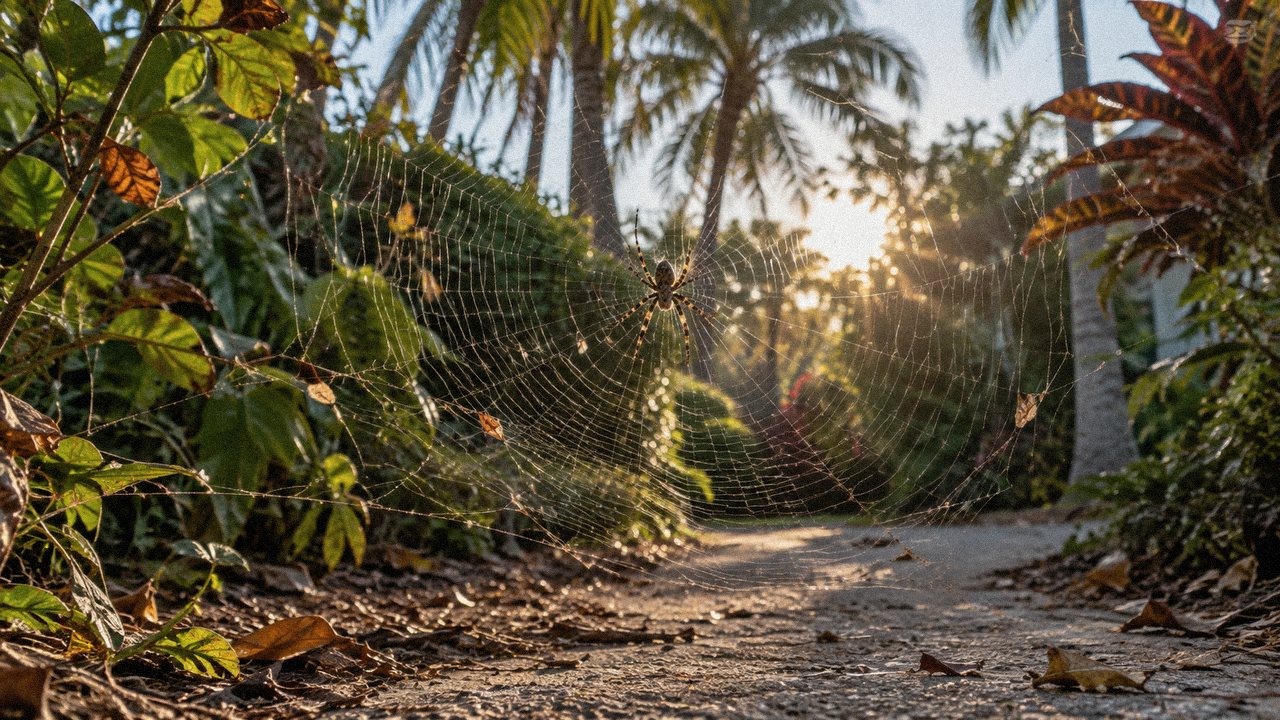
You see more spiders in the fall mainly because of mating season and growth, not because spiders are fleeing the cold. From late summer into fall, mature male spiders leave their hiding places and wander across floors and walls in search of females, while outdoor orb weavers reach full size and build their biggest, most visible webs. In South Florida, where temperatures barely drop, the change you notice is driven by spider biology more than by weather.
That distinction matters for what you do next. If the spiders were already living in your home, chasing the one on the wall will not solve anything, but cutting their hiding places and food supply will. This guide explains what is really happening in fall, which spiders you are seeing and how to respond.
Fall Spider Activity: Myth vs. Reality
The most common belief about fall spiders is that they move indoors to escape cooler weather. Arachnologists at the Burke Museum at the University of Washington call this a myth. House spiders are usually different species from yard and garden spiders. Outdoor spiders are not drawn to indoor habitats where they cannot survive, because they are not adapted to indoor conditions. According to the museum, fewer than 5% of the spiders you see indoors have ever been outdoors.
| Common belief | What the science says |
|---|---|
| Spiders move inside when nights get cooler | Outdoor spiders are not attracted to warmth and rarely survive indoors |
| The spiders in the house just arrived | Most were already living in walls, closets, storage and behind furniture |
| More spiders means an infestation started in fall | Mature males are simply more visible while they search for mates |
| Big webs in the yard mean more spiders | Orb weavers are reaching adult size and building larger webs |
| A spray where the spider was seen fixes it | It kills one spider; the hidden population and its food remain |
Mating Season: Why Male Spiders Wander
The spider that dashes across your living room floor is very likely a mature male. The Burke Museum explains that the surge in indoor sightings in late summer coincides with mating season, and that what you are seeing is “sexually mature males wandering in search of mates.” Females and young spiders stay out of sight in storage areas, wall voids and behind furniture.
In other words, the spiders were there all along. Mating season just brings the males out into the open. That is why sightings can seem to appear overnight, and why they fade again once the season passes. For a tour of where the rest of the population hides, see common places spiders hide inside your home.
The Long-Legged Brown Spider You Keep Seeing
In Florida homes, one of the most common wanderers is the male southern house spider. Females stay hidden in thick, messy webs around cracks, window corners and eaves, while the lighter-colored, long-legged males roam. UF/IFAS notes that these males are often mistaken for brown recluses, but they have eight eyes instead of six and very long pedipalps, the leg-like structures near the mouth. The southern house spider is harmless, and UF/IFAS reports that there is no scientific evidence that any recluse spider is established in Florida.
Need help with pests in South Florida?
Toro Pest Management has protected homes and businesses since 1969. Get a free inspection and $25 off your first service, backed by our 110% Satisfaction Guarantee: if the pests come back, so do we, at no extra cost.
Orb Weavers Reach Full Size in Late Summer and Fall
Outdoors, fall is when South Florida’s most eye-catching spiders peak. These are orb weavers, and their webs get bigger as the spiders mature.
active peak
Source: UF/IFAS EDIS (IN467, IN324)
- Golden silk spider. According to UF/IFAS, adult males are present from July to September, most females mature in August, and mature females remain into late fall. Their golden webs, often 1 to 2 meters across, are most noticeable in late summer and fall. The spider is not dangerous; its bite is much milder than a bee sting.
- Spiny orb weaver. UF/IFAS reports that adult females occur all year but are most common from October through January, with males most common in October and November. Body and web size increase significantly in late summer and early fall. These small, colorful, crab-shaped spiders often build on trees and shrubs around houses, and their bite is not known to cause serious effects in people.
Both are beneficial. Orb weavers catch mosquitoes and other flying insects, so a web in a tree away from your walkway is doing you a favor. If you want to know more about these species, read 7 interesting facts about spiders.
What Fall Spiders Reveal About Your Home
Even though fall spiders are not “invading,” a lot of spider activity still tells you something useful:
- Hiding places. Many wandering males point to a healthy population in clutter, storage boxes and undisturbed rooms.
- Food supply. Spiders only thrive where insects do. Late in the rainy season, mosquitoes, gnats and moths are still abundant around many South Florida homes.
- Entry points. Hunting spiders and the insects they eat use the same gaps: cracks around doorframes, torn screens, worn door sweeps and openings around pipes.
Fall is also a good time to check for other pests that use the same entry points. Rodents look for shelter at this time of year too; our guide on how to prevent rodent infestations in fall covers the gaps to seal.
What Not to Do About Fall Spiders
Quick fixes feel good, but they rarely help:
- Spraying a store-bought insecticide where you saw the spider. It may kill that spider, but it does nothing about the hidden population or the insects feeding it.
- Setting off a fogger. The University of Kentucky notes that total-release “bug bombs” are seldom effective against spiders.
- Relying on scented home remedies. They do not remove the shelter or food that keeps spiders in your home.
- Squashing the spider and forgetting about it. That male was one of many; the conditions behind him are still there.
A Fall Spider Checklist for South Florida Homes
- Vacuum spiders, webs and egg sacs in corners, closets, under furniture and in the garage. Seal and discard the bag.
- Declutter storage areas and move items from cardboard boxes into sealed plastic bins.
- Seal gaps around doors, windows, pipes and utility lines; add door sweeps and repair screens.
- Switch entrance lights to yellow or sodium vapor bulbs, which the University of Kentucky says attract fewer night-flying insects.
- Trim shrubs and vines that touch the house, and move firewood and debris away from walls.
- Drain standing water after the last storms of the rainy season to cut mosquito and gnat numbers.
- Place glue traps along walls in rooms where you see spiders, to find where they travel.
When to Call a Professional
Call for help if spider sightings continue well past the fall peak, if you find egg sacs or spiderlings indoors, if you see widow spiders in the garage or around doors and outdoor furniture, or if the spiders are clearly feeding on another pest problem. To understand the year-round drivers, read why there are more spiders around your home.
Toro’s residential pest control services include Total Home Protection Gold 365, an every-other-month service inside and outside your home that includes removing spider nests outside the house. Technicians trained at the TORO Institute find the hiding places and entry points behind the fall surge, and the 110% Satisfaction Guarantee means that if the bugs come back, so will Toro, at no additional cost to you. Identify what you are seeing in our spider pest library.

Contact Toro today
A free inspection & $25 off your first service
A trained Toro technician inspects your home or business, explains what was found and gives you a clear plan and quote, backed by our 110% Satisfaction Guarantee.
305-594-4767Frequently Asked Questions
Is fall spider season in Florida?
Do spiders come inside when it gets cold?
Why are there so many big spider webs in my yard in the fall?
Are fall spiders more dangerous?
Should I kill the spiders I see in the fall?
Sources
- Myth: Spiders come indoors in the fall, Burke Museum, University of Washington
- Golden Silk Spider, Trichonephila clavipes (Linnaeus) (Arachnida: Araneae: Tetragnathidae), UF/IFAS Extension
- Spiny Orb Weaver Spider, Gasteracantha cancriformis (Linnaeus) (Arachnida: Araneae: Araneidae), UF/IFAS Extension
- Eliminating Spiders Around Homes and Buildings, University of Kentucky Entomology
- An Introduction to Some Common and Charismatic Florida Spiders, UF/IFAS Extension
- Southern Black Widow, Latrodectus mactans (Fabricius) (Arachnida: Araneae: Theridiidae), UF/IFAS Extension
Educational content. This article is for general information about pests in South Florida and is not medical, legal or professional advice. If you have a bite, sting or allergic reaction, contact your doctor; in an emergency, call 911. Pest problems vary from home to home, so a licensed professional should inspect before treatment. When using any pesticide, always read and follow the product label.


