
Key takeaways
- Whiteflies move from yard to yard, so a treated hedge next to an untreated one can be reinfested; community-wide coordination works better than isolated treatments.
- Per UF/IFAS, homeowners may treat plants only on their own property; HOA common areas and commercial grounds need a hired pest control company.
- Ficus hedges usually drop leaves only after several months of infestation, so routine scouting by landscape crews catches problems early.
- Whiteflies do not typically kill large, healthy plants; most ficus hedges grow new leaves once the pest is controlled.
In this article
- Why Whiteflies Spread So Easily in HOA Communities
- What Whiteflies Do to a Community’s Landscape
- Who Can Treat Whiteflies: Owners, the HOA or a Contractor?
- How to Build a Community-Wide Whitefly Plan
- Where HOA Budgets Lose Money on Whiteflies
- Handling Resident Complaints and Disputes
- How Toro Helps HOA Communities
- Frequently Asked Questions
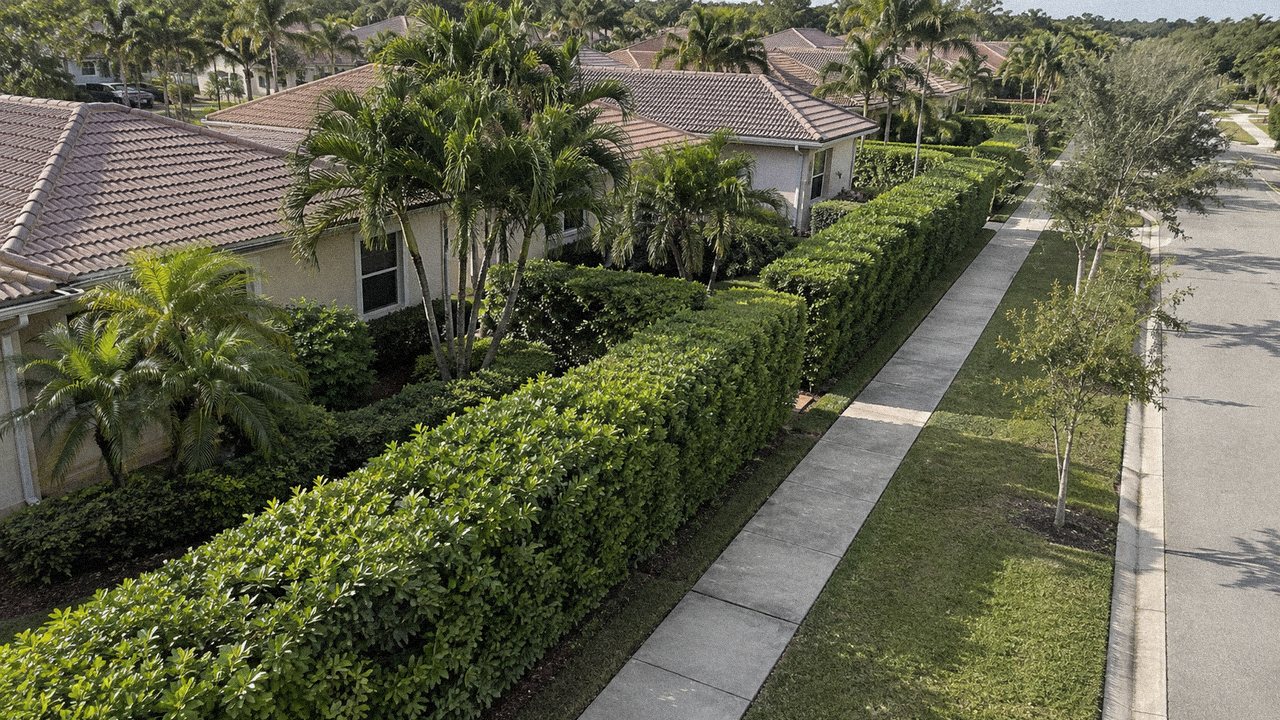
Whiteflies hit HOA communities harder than single homes because the plants they feed on are planted in long, continuous rows: perimeter ficus hedges, palms along entry drives and the same shrubs repeated lot after lot. When one stretch is infested and the next is not treated, the insects simply move over, and the board ends up paying for the same problem again and again.
The good news is that whiteflies are manageable when a community acts together. This guide explains what whiteflies do to shared landscapes, who is allowed to treat what, how to set up a community-wide plan and where boards most often lose money.
Why Whiteflies Spread So Easily in HOA Communities
Three whiteflies cause most of the landscape trouble in Miami-Dade, Broward and Palm Beach, and HOA plantings happen to feed all of them:
- Ficus whitefly feeds only on ficus. UF/IFAS Extension in Palm Beach County names weeping fig (Ficus benjamina) and banyan as the biggest concerns, the same plants used for many privacy hedges.
- Rugose spiraling whitefly has a broad host range. Its Florida favorites include gumbo limbo, adonidia palm, coconut palm and black olive, common choices for entrances, medians and pool areas.
- Silverleaf whitefly feeds on more than 500 plants, and in landscapes its main target is hibiscus.
Shared landscapes make the spread worse. A whitefly generation takes about four weeks in summer, according to UF/IFAS, and South Florida’s warm climate lets generations overlap through most of the year. A hedge line that runs behind 20 homes is effectively one large plant to a whitefly. For the details, read why whiteflies spread so fast in South Florida.
You can also find identification photos and species notes in our whitefly pest library.
What Whiteflies Do to a Community’s Landscape
The damage builds slowly, then shows up all at once:
- Bare hedges. Ficus leaves turn yellow and drop. UF/IFAS warns that if you already have defoliation, you have had the whitefly for numerous months. Lost privacy is usually the first thing residents complain about.
- Sticky surfaces. Whiteflies excrete honeydew, a sugary liquid that drips onto sidewalks, pool decks and parked cars. UF/IFAS notes it can damage the finish on cars if it is not washed off.
- Black sooty mold. A fungus grows on the honeydew and coats leaves and hardscape. It eventually wears off, but pressure washing is often needed to remove it sooner.
- Waxy mess. Rugose spiraling whitefly leaves white wax on leaves and on the ground below.
- Branch dieback. In stressed plants, sections of hedge or canopy can die back and need pruning.
The sooty mold problem has its own guide: why your hedge is turning black. For what happens to ficus specifically, see why whiteflies are destroying ficus hedges across Florida.
Need help with pests in South Florida?
Toro Pest Management has protected homes and businesses since 1969. Get a free inspection and $25 off your first service, backed by our 110% Satisfaction Guarantee: if the pests come back, so do we, at no extra cost.
Who Can Treat Whiteflies: Owners, the HOA or a Contractor?
This is where many associations get into trouble. The University of Florida’s whitefly FAQ sets out the basic rules:
- Homeowners may apply any non-restricted-use pesticide to plants on their own property, but not to plants beyond their property line.
- Anyone who is paid to apply pesticides in Florida needs the proper pesticide license.
- For common areas, rights-of-way and commercial areas, the property owner, in this case the association, needs to hire a pest control company.
In practice, that means a resident cannot “help out” by spraying the common hedge behind their home, and a landscape crew without a pesticide license should not be treating whiteflies as part of its mowing contract.
| Area | Who usually decides | Who may treat |
|---|---|---|
| Common hedges, entry plantings, medians | HOA board or manager | A licensed pest control company hired by the association |
| Plants inside an owner’s lot | The owner, unless your documents say otherwise | The owner (non-restricted products, label directions) or a licensed company |
| Hedges on lot lines | Defined by your governing documents | Whoever is responsible under those documents, coordinated with the neighbor |
| Condo grounds | Association | A licensed pest control company |
Responsibility for plants on individual lots is set by each community’s declaration and rules, not by a single state standard, so check yours with the association’s attorney before writing a policy.
How to Build a Community-Wide Whitefly Plan
Treating one hedge at a time is the most expensive way to fight whiteflies. A coordinated plan is simpler.
1. Confirm the Problem First
Ficus drops leaves under many kinds of stress, including freezing temperatures, quick temperature changes and watering problems, according to UF/IFAS, and UF/IFAS also flags powdery mildew as a “not whitefly” look-alike. UF/IFAS advises treating only when live whiteflies are present. A professional inspection should identify the species, map which areas are infested and note plants at risk.
2. Map Every Host Plant in the Community
List every ficus hedge, palm, gumbo limbo, black olive and hibiscus planting in the common areas, with location and approximate size. That map tells you where to scout, what to treat first and which areas are likely to reinfest.
3. Schedule Scouting
Adult whiteflies are poor indicators: you often will not see them even during an active infestation, notes the UF/IFAS Tropical Research and Education Center. Scouting should check leaf undersides for eggs, nymphs and pupal cases. Landscape crews can do a quick visual check during regular visits and report yellowing, sticky leaves or spiral wax patterns.
4. Treat Common Areas on One Schedule
UF/IFAS says systemic treatments applied to the soil or trunk should provide approximately one year of control, with spring the preferred timing for ficus. Treating all infested common plantings in the same window reduces the chance that untreated areas reinfest treated ones.
5. Communicate With Residents
Send owners a short notice explaining what whiteflies look like, which plants are affected, what the association is treating and what owners should do on their own lots. Offer a way to report symptoms. Residents who understand the plan are far less likely to file complaints or spray on their own.
Where HOA Budgets Lose Money on Whiteflies
Boards rarely overspend on whitefly treatment itself. The losses come from avoidable decisions:
- Treating late. By the time a hedge is bare, the infestation is months old and recovery takes longer.
- Spot treating. Treating the worst block and ignoring the rest invites reinfestation.
- Replacing plants too soon. UF/IFAS reports that in most cases trees and hedges grow new leaves once the whitefly is controlled. Pulling out a recovering hedge doubles the expense.
- Over-pruning. Heavy shearing removes the leaves a stressed hedge needs. UF/IFAS Extension in Palm Beach County suggests reducing or delaying shearing so plants keep more foliage and more energy.
- Wrong watering. Both drought and overwatering stress plants. The same fact sheet suggests no more than about 1 inch of water per week.
- Repeated contact sprays. Broad sprays repeated over and over can kill the natural enemies that help keep whiteflies down. Our article on common mistakes in whitefly treatments covers these errors in detail.
The longer-term cost to curb appeal and resale value is covered in how whiteflies threaten your landscape and property value.
Handling Resident Complaints and Disputes
Whiteflies cause friction because the damage is so visible: a bare hedge exposes a backyard, and honeydew spots a resident’s new car. A few habits keep tempers down:
- Put the policy in writing. State who handles common areas, lot plantings and shared lot-line hedges.
- Report progress. Results are not instant. UF/IFAS notes that symptoms do not stop or go away immediately even when the pest is under control, and sooty mold takes time to wear off.
- Explain the timeline. New leaves on a ficus hedge take weeks to months to fill in.
- Record the work. Keep inspection reports and treatment dates in the association’s files.
How Toro Helps HOA Communities
Toro has protected South Florida properties since 1969 and treats HOA common areas, condo grounds and commercial landscapes across Miami-Dade, Broward, Palm Beach and the Keys. Our whitefly control service starts with a free inspection of your ficus hedges, palms and trees, including the undersides of the leaves, to identify which whitefly you have and how heavy the infestation is.
You get a clear plan and a quote before any work begins. We treat the infested plants and check your ficus for early signs of new whiteflies, and if the bugs come back, so will Toro, at no additional cost to you. For communities managed by a management company, our property management pest control programs can cover the buildings and grounds under one plan.

Contact Toro today
A free inspection & $25 off your first service
A trained Toro technician inspects your home or business, explains what was found and gives you a clear plan and quote, backed by our 110% Satisfaction Guarantee.
305-594-4767Frequently Asked Questions
Who is responsible for whitefly treatment in an HOA?
Can our landscaping company treat whiteflies?
How quickly do whiteflies spread through a neighborhood?
Should our HOA rip out all the ficus hedges?
Does Toro work with property managers and HOA boards?
Sources
- Whiteflies on Landscape Ornamentals, UF/IFAS Extension
- Frequently Asked Questions (FAQs), University of Florida Entomology and Nematology Department
- Ficus Whitefly Management in the Landscape, UF/IFAS Tropical Research and Education Center
- Whiteflies in Palm Beach County ~ Introduction, UF/IFAS Extension Palm Beach County
- Whiteflies in Palm Beach County ~ Reducing Stress on Plants, UF/IFAS Extension Palm Beach County
- Whitefly in the Landscape, UF/IFAS Tropical Research and Education Center
Educational content. This article is for general information about pests in South Florida and is not medical, legal or professional advice. If you have a bite, sting or allergic reaction, contact your doctor; in an emergency, call 911. Pest problems vary from home to home, so a licensed professional should inspect before treatment. When using any pesticide, always read and follow the product label.


