
Key takeaways
- Floodwater mosquitoes hatch from eggs already waiting in the soil, so huge swarms can appear soon after a storm floods low ground.
- The CDC says these floodwater mosquitoes are aggressive biters but do not spread germs to people.
- Mosquitoes that can spread viruses may increase about 2 weeks after a hurricane, mostly from containers and debris holding rainwater.
- Large flooded areas are a job for county mosquito control; your job is the buckets, tarps, gutters and debris on your own property.
- Stay out of floodwater: it can hold sewage, hidden debris and electrical hazards.
In this article
- Two Kinds of Flood Mosquitoes: Floodwater vs. Container Breeders
- How Floodwater Mosquitoes Hatch by the Millions
- Are Floodwater Mosquitoes Dangerous?
- Why the Water Left Behind Matters More
- What You Can Drain and What You Can’t
- Protecting Yourself While Cleaning Up
- Keep Mosquitoes Out of the House
- When to Call for Help After a Flood
- Frequently Asked Questions
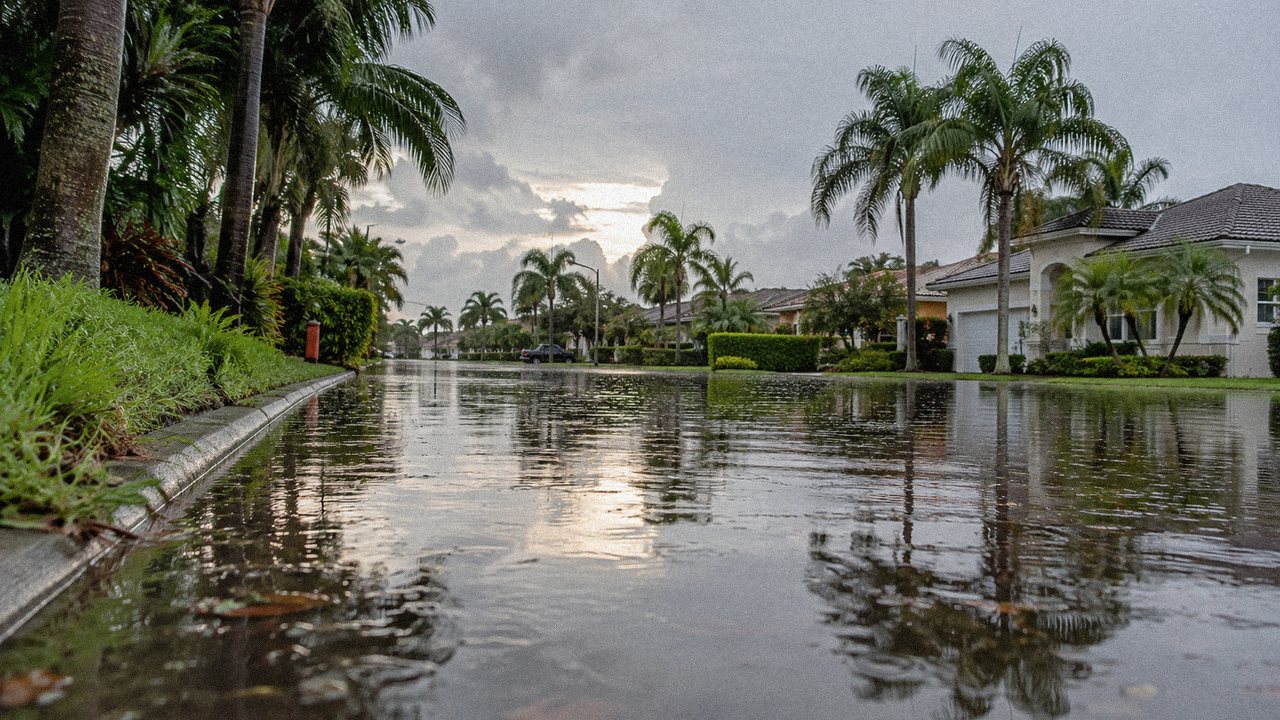
Floodwaters cause two different mosquito problems. First, flooding hatches enormous numbers of floodwater mosquitoes from eggs that were already waiting in the soil; they bite hard but, according to the CDC, do not spread germs to people. Second, about two weeks later, the rainwater left in buckets, tarps, gutters and debris can produce the container mosquitoes that do carry diseases like dengue and West Nile virus.
Knowing which problem you are facing tells you what to do. You cannot drain a flooded field or a swale, but you can empty every container on your property before those second-wave mosquitoes emerge. This guide explains how floodwater mosquitoes work, what the real health risk is after a storm in South Florida, and how to protect your home and family during cleanup.
Two Kinds of Flood Mosquitoes: Floodwater vs. Container Breeders
Not every mosquito that shows up after a storm comes from the same place. Mosquito scientists sort them by where the eggs are laid, and that difference shapes both the risk and the response.
| Floodwater mosquitoes | Container mosquitoes | |
|---|---|---|
| Where eggs are laid | On moist soil in low areas that flood: pastures, swales, ditches, salt marshes | On the inside walls of water-holding containers, just above the waterline |
| What triggers hatching | Eggs dry out, then hatch when rain or a storm floods the area | Rising water in buckets, tires, tarps and plant saucers covers the eggs |
| When they show up | Soon after flooding, in very large numbers | Roughly 1-3 weeks after the storm, as containers keep holding water |
| Disease risk to people | Nuisance biters; the CDC says they do not spread germs to people | Species such as Aedes aegypti can spread dengue, Zika and chikungunya |
| Who controls them | County and district mosquito control programs | You, by draining and scrubbing containers, plus professional help |
How Floodwater Mosquitoes Hatch by the Millions
Floodwater mosquitoes play a long game. According to UF/IFAS, females lay their eggs on moist ground, not on water, in places like pastures, citrus furrows, salt marshes and swales. A single female can lay about 200 eggs per batch. The eggs must dry out before they can hatch, and they can survive in dry soil through winter and spring.
When a hurricane or tropical storm floods those areas, the water signals the eggs to hatch, all at once. UF/IFAS estimates there can be 0.7 to 1.3 million eggs per acre of floodwater habitat. That is why a storm that floods a field, an empty lot or a canal bank can be followed by clouds of mosquitoes even in neighborhoods where every homeowner keeps a tidy yard.
Some floodwater species are notable in Florida:
- The gallinipper (Psorophora ciliata). This native mosquito is about half an inch long and looks like an oversized Asian tiger mosquito. UF/IFAS says its eggs can stay dry and dormant in soil for years, and its painful bite makes it memorable. It is not considered a significant disease vector.
- The black salt marsh mosquito (Aedes taeniorhynchus). Found in brackish coastal marshes of North, Central and South America, it is an aggressive biter whose adults emerge in large numbers after rains and flooding, and it accounts for a large part of mosquito insecticide applications in Florida (UF/IFAS).
Because the eggs were laid before the storm, sometimes long before, a single flood can hatch eggs that built up over many months at once. For more on why every downpour seems to bring a new wave, see why mosquito problems get worse after rain in South Florida.
Need help with pests in South Florida?
Toro Pest Management has protected homes and businesses since 1969. Get a free inspection and $25 off your first service, backed by our 110% Satisfaction Guarantee: if the pests come back, so do we, at no extra cost.
Are Floodwater Mosquitoes Dangerous?
Mostly, they are miserable rather than dangerous. The CDC states that the floodwater mosquitoes that hatch after flooding are mostly nuisance species: aggressive biters that do not spread germs to people. The CDC does not expect an increase in mosquito-borne illness from flooding alone.
That does not mean you can ignore them. Their sheer numbers make outdoor cleanup harder, and some people react strongly to bites. The real disease concern comes on a different schedule, from different mosquitoes:
| Time after the storm | What happens (CDC) | What you should do |
|---|---|---|
| First days | Flooding hatches floodwater mosquito eggs; swarms of nuisance biters | Wear repellent and long clothing during cleanup |
| About 2 weeks | Mosquitoes that can spread viruses may increase, even in areas that only got heavy rain | Empty and scrub every container weekly |
| Several more weeks | Those mosquitoes could begin spreading viruses to people | Keep preventing bites; see a doctor if you get sick |
The CDC adds that if dengue or West Nile virus was already circulating in an area before the storm, the risk of infection is higher. In South Florida, where dengue cases are reported most years, that makes the second wave worth taking seriously. Our guide to the post-hurricane mosquito boom covers the weeks after a storm in more detail.
Why the Water Left Behind Matters More
Once the flood recedes, thousands of small pockets of water remain: in overturned furniture, kids’ toys, tarps over damaged roofs, piles of storm debris, clogged gutters and tires. These are perfect for container mosquitoes.
According to the CDC, Aedes mosquitoes lay eggs on the inner walls of containers just above the waterline, and an egg can become an adult in 7 to 10 days. Their eggs can survive drying out for up to 8 months, so a bucket that was dry before the storm may already hold eggs that hatch the moment it fills. These mosquitoes do not fly far, only a few blocks in their lifetime, which means the mosquitoes biting you after a storm usually come from your block.
Flood-fouled water adds another player. The southern house mosquito, a common house mosquito in Florida, lays rafts of 100 or more eggs on nutrient-rich standing water, from wastewater and stagnant pools to old tires, birdbaths and storm-water catch basins, and those eggs typically hatch in 24 to 30 hours (UF/IFAS). This night biter can carry St. Louis encephalitis and West Nile virus.
What You Can Drain and What You Can’t
UF/IFAS is clear that dumping containers has little effect on large floodwater habitats like pastures and swales; those are treated by mosquito control agencies, and even their treatments may not be immediate or permanent. Focus your effort where it counts.
| Water source | Who handles it | What to do |
|---|---|---|
| Buckets, toys, coolers, pots, trash can lids | You | Empty, scrub the walls and store upside down or under cover |
| Tarps on roofs, boats and debris piles | You | Stretch tight so they shed water, or drain the folds after each rain |
| Clogged gutters and downspouts | You | Clear storm debris so water flows |
| Ponds, fountains, birdbaths, bromeliads | You | Flush or refresh; use a Bti larvicide per the label where water must stay |
| Swales, ditches, flooded lots | County mosquito control | Request a mosquito inspection through 311 |
| Neglected or green pools nearby | County mosquito control | Request a mosquito inspection through 311 |
Miami-Dade County recommends a larvicide containing Bti, a natural bacterium that only kills mosquito and black fly larvae, for water you cannot drain, such as bromeliads, birdbaths, rain barrels, decorative fountains and ponds. Use any larvicide strictly as its label directs.
Protecting Yourself While Cleaning Up
People cleaning up after a storm are more likely to be bitten, the CDC notes, because they spend long hours outside, often at dawn and dusk. Protect yourself with:
- An EPA-registered repellent on exposed skin and clothing, applied as the label directs
- Long sleeves, long pants, socks and closed shoes
- Permethrin-treated clothing for long cleanup days (permethrin is for clothing and gear, never skin)
- Breaks indoors or in screened areas during peak biting times
Floodwater itself is a hazard too. The CDC warns that floodwater can contain human and animal waste, hide debris such as lumber and even vehicles, and be electrified by downed power lines.
Keep Mosquitoes Out of the House
Storm damage often leaves gaps that let mosquitoes inside, and power outages tempt people to open windows. The CDC recommends installing, repairing and using window and door screens, not propping doors open (including garage doors) and using air conditioning when possible. Check screens for tears from flying debris, and patch gaps around damaged doors and windows as soon as you can.
When to Call for Help After a Flood
Call your county for the big water you cannot control. In Miami-Dade, you can request a mosquito inspection through 311 or online, and the county says an inspector should arrive within one to two business days. Area-wide floodwater control is the county’s job, so report what you see rather than trying to treat it yourself.
For your own yard, Toro’s mosquito control service starts with a free inspection of the outside of your home or business to find where mosquitoes breed and rest. Technicians treat breeding sites with larvicide granules and growth regulators, apply a plant-oil barrier treatment to the shrubs and plants where adults rest and point out the containers, gutters and plants that hold water. Toro has protected South Florida since 1969 and responds within 24 hours, which matters when a storm has just turned your yard into a nursery.
To prepare before the next storm instead of reacting after it, read our guide to mosquito control during hurricane season, and learn more about local species in our mosquito pest library.

Contact Toro today
A free inspection & $25 off your first service
A trained Toro technician inspects your home or business, explains what was found and gives you a clear plan and quote, backed by our 110% Satisfaction Guarantee.
305-594-4767Frequently Asked Questions
How long after a flood do mosquitoes appear?
Do floodwater mosquitoes carry Zika or dengue?
Should I spray insecticide on standing floodwater?
Why are the mosquitoes after a flood so big?
Can mosquitoes breed in a flooded swimming pool?
Sources
- What to Do After a Hurricane or Flood, Centers for Disease Control and Prevention
- Hurricanes and Mosquitoes, UF/IFAS Extension
- Huge, aggressive mosquito may be abundant in Florida this summer, UF/IFAS expert warns, UF/IFAS News
- Floodwater Safety, Centers for Disease Control and Prevention
- Life Cycle of Aedes Mosquitoes, Centers for Disease Control and Prevention
- Mosquito Tips and Resources, Miami-Dade County Mosquito Control
- Southern House Mosquito Culex quinquefasciatus Say, UF/IFAS Extension
- Black Salt Marsh Mosquito Aedes taeniorhynchus (Wiedemann) (Insecta: Diptera: Culicidae), UF/IFAS Extension
Educational content. This article is for general information about pests in South Florida and is not medical, legal or professional advice. If you have a bite, sting or allergic reaction, contact your doctor; in an emergency, call 911. Pest problems vary from home to home, so a licensed professional should inspect before treatment. When using any pesticide, always read and follow the product label.


