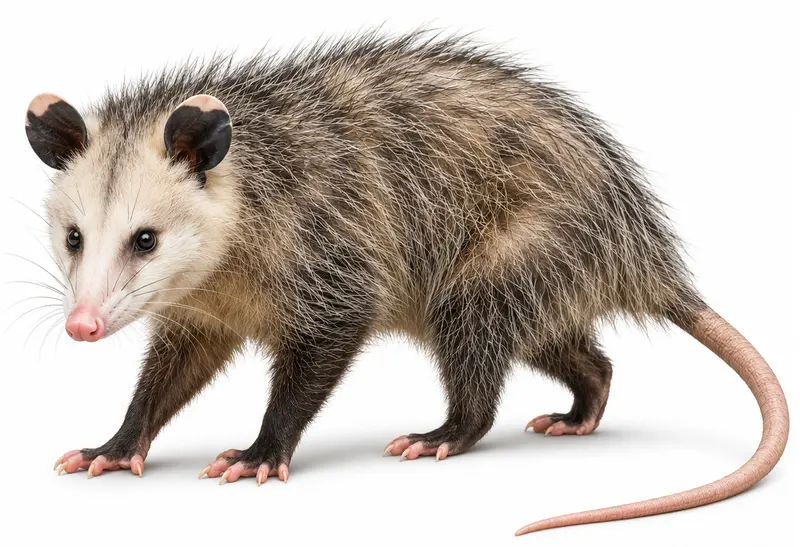
The Virginia opossum (Didelphis virginiana) is a native Florida animal and the only marsupial in North America: the female carries her young in a pouch. Opossums do not dig their own dens, so in South Florida they move into whatever shelter they find, including the space under a house, deck or shed, a garage, or an attic. One passing through your yard at night is normal, but one living under or inside your home is worth dealing with.
- Since 1969Third generation, protecting South Florida
- 110% GuaranteeIf the bugs come back, so will Toro, at no additional cost
- Within 24 HoursResponse guaranteed
- Free InspectionPlus $25 off your first service
What Are Opossums?
The Virginia opossum, Didelphis virginiana, is the only marsupial in North America. Like a kangaroo, the female raises her young in a pouch. It is native to Florida and found across the state, from rural woods to the busiest neighborhoods in Miami-Dade and Broward.
Opossums are solitary and active at night. UF/IFAS notes that they use home ranges of 10 to 350 acres and rarely move more than a mile from where they were born. They do not dig their own burrows: they move into existing shelter such as hollow logs, woodpiles, other animals’ burrows and, around homes, the space under houses, decks and sheds, garages and attics.
They are also short-lived. UF/IFAS gives a lifespan of only 1 to 2 years in the wild, and many are hit by cars while crossing roads at night.
How to Identify Opossums
- Size: a body of 14 to 19 inches plus a tail of 10 to 17 inches. UF/IFAS says Florida opossums average about 4 pounds, smaller than those up north.
- Face: a long, white, pointed face with a pink nose, dark eyes and thin black ears.
- Fur: coarse and gray to grayish-white, often looking scruffy.
- Tail: long, scaly and hairless, and able to grip branches.
- Feet: hand-like feet with an opposable “thumb” on the hind feet, which makes opossums good climbers.
- Teeth: 50 teeth, more than any other North American land mammal, which they show when they hiss.
Opossum Life Cycle and Behavior
Opossums eat almost anything. UF/IFAS lists fruit, seeds, insects, worms, eggs, frogs, snakes, small animals and carrion, and around homes they eat garbage and pet food and occasionally go after backyard chickens.
In Florida, most young are born from February through June, though breeding can continue into November. Females usually have one or two litters a year, averaging 7 to 8 young. Pregnancy lasts only 13 days, and the newborns, about the size of a honeybee, crawl into the pouch and attach to a teat for about two months. After that they ride on their mother’s back, are weaned at about 100 days and are on their own at about 150 days. A female with young needs a safe den, which is often when an opossum moves under a house or into a garage or attic.
When seriously threatened, an opossum may go into a stiff, catatonic state, the famous “playing possum.” UF/IFAS says it can lie with its eyes open, drool and release a foul-smelling fluid for up to four hours before getting up and leaving.
Signs Opossums Are Living on Your Property
- A torn or pushed-in crawl space screen, vent cover or skirting, or a gap under a deck, porch or shed with a worn path leading to it.
- Noises under the floor or in the attic at night.
- A strong musky odor near an opening or in the garage.
- Droppings near an opening, in the garage or in the attic.
- Garbage cans tipped over and pet food bowls emptied overnight.
- Fallen fruit eaten and gardens disturbed.
- An opossum seen repeatedly in the same place, or with young on its back.
Contact Toro today
A free inspection & $25 off your first service
A trained Toro technician inspects your home or business, explains what was found and gives you a clear plan and quote, backed by our 110% Satisfaction Guarantee.
305-594-4767Why Opossums Are a Problem
Dens in and under your home. An opossum living under the house, in a garage or in the attic leaves droppings and urine behind, and the smell can come up into the house. A female may raise a whole litter there.
Garbage, pet food and chickens. Opossums tip over garbage and eat pet food left outdoors, which keeps them coming back. They can also take eggs and chickens from an unsecured coop.
Bites and scratches. Opossums usually avoid people, but a cornered opossum will hiss and can bite or scratch. Keep pets and children away and never try to grab one.
Health and hygiene. UF/IFAS describes opossums as nearly immune to rabies, so rabies is rare in them. Like other wildlife, though, they leave droppings and urine where they den. Clean up with gloves, avoid stirring up dust and wash your hands afterward.
Where Opossums Live and Hide on South Florida Properties
- Under the house, in crawl spaces behind loose screens, vents or skirting.
- Under decks, porches and sheds, and inside sheds left open.
- Garages with doors left open at night or gaps at the bottom.
- Attics, reached by climbing trees, fences and vines.
- Woodpiles, brush piles and dense vegetation near the house.
- Common areas of condos, HOAs, schools, restaurants and hotels near dumpsters and landscaped areas.
When Opossums Are Most Active in South Florida
| Season | Opossum activity | What to do |
|---|---|---|
| February to June | Most young are born; mothers look for safe dens and later carry their young on their back | Check crawl spaces, decks and sheds for openings and do not seal an opening while young may be inside. |
| Summer to fall | Young opossums are on their own and wander into yards, garages and pools | Keep garage doors closed at night and secure garbage and pet food. |
| Cool nights | Opossums look for warm, dry shelter under houses and in garages and attics | Close gaps under the house and repair loose vent covers and screens. |
| Year-round | Opossums are active at night all year in South Florida | Never feed them and remove fallen fruit and other easy food. |
How to Keep Opossums Away
- Take away the food. Use garbage cans with tight lids, feed pets indoors or bring bowls in before dark, pick up fallen fruit and clean up spilled bird seed.
- Protect chickens in a covered coop that is closed at night.
- Close the shelter, but only when it is empty. Repair crawl space screens and vent covers, and close gaps under decks, porches and sheds with sturdy wire mesh once you are sure no animal or young are inside.
- Keep garage doors closed at night.
- Clear woodpiles, brush and debris near the house, and trim trees and vines that reach the roof.
- Never feed wildlife. Feeding draws opossums, raccoons and rats closer to your home.
How Toro Handles Opossum Problems
- Property inspectionA Toro technician inspects your crawl space, decks, sheds, garage, attic and yard to find where the opossum is getting in, where it is denning and what is drawing it to your property.
- Humane trapping and removalThrough our wildlife control service, we set humane live traps, check them at least every 24 hours and handle each captured opossum following FWC rules.
- Advice on closing the entry pointsOnce the animals are out, we show you the openings that need to be repaired and the changes that keep new opossums from moving in.
- Follow-upWe come back to check the traps and the property until the opossums are gone, and tell you what to watch for so new ones do not move in.
Toro Pest Management has served South Florida since 1969. Our wildlife trapping and removal serves Miami-Dade properties, from Miami and Miami Beach to Doral, Hialeah, Pinecrest and Homestead; elsewhere, call to check. We also work with property managers, schools and hotels and resorts on common grounds. We respond within 24 hours, guaranteed, and offer a free inspection plus $25 off your first service. Call 305-594-4767. Hablamos Español.
Seeing signs of opossums? Get a free inspection and $25 off your first service.
Schedule Your Free InspectionOpossums: Frequently Asked Questions
Is it legal to trap and remove opossums in Florida?
Yes, when it follows Florida Fish and Wildlife Conservation Commission (FWC) rules. Property owners may take nuisance wildlife on their own property or authorize someone to do it. Live traps must be checked at least once every 24 hours, and a captured animal must be released legally or humanely euthanized within 24 hours. The FWC allows release on the same property, or relocation only to a site of at least 40 contiguous acres in the same county with the landowner's written permission. Many homeowners hire a wildlife control professional.
Do opossums carry rabies?
Rabies is rare in opossums. UF/IFAS describes the Virginia opossum as nearly immune to rabies. Still, an opossum is a wild animal with 50 sharp teeth: never pick one up or corner it, keep pets away and wash your hands after any cleanup. If a person is bitten or scratched, wash the wound and see a doctor.
Is the opossum in my yard dangerous?
Usually not. Opossums are shy, slow-moving animals that come out at night to look for food and move on. When threatened they hiss and show their teeth, and if the threat continues they may "play dead." Leave it alone and it will normally leave. It becomes a problem when it starts living under your house, in the garage or in the attic, or when it keeps coming back for garbage and pet food.
What does it mean when an opossum plays dead?
UF/IFAS explains that a seriously threatened opossum can go into a stiff, catatonic state with its eyes open, drooling and sometimes releasing a foul-smelling fluid. It can stay that way for up to four hours. It is not a trick the animal controls; give it space and it will get up and leave on its own.
How do I know if an opossum is living under my house?
Look for a loosened or torn crawl space screen or vent cover, a gap under a deck, porch or shed with a worn path, droppings near the opening, a strong musky smell, garbage or pet food that disappears overnight, and noises under the floor at night. An outdoor camera pointed at the opening for a night or two usually confirms what is going in and out.
I found baby opossums. What should I do?
Young opossums ride on their mother's back after they leave the pouch, and some fall off. Wildlife rehabilitators generally consider a young opossum longer than about 7 inches from nose to rump (not counting the tail) old enough to be on its own. Smaller babies, or any that are injured or cold, should go to a licensed wildlife rehabilitator. Do not try to raise them yourself.
How do I keep opossums away?
Take away food and shelter. Secure garbage cans, bring pet food in at night, pick up fallen fruit, close up openings under the house, decks and sheds with sturdy screen once no animal is inside, keep garage doors closed at night and clear out woodpiles and brush near the house.
Related Pests
Pest Control Across South Florida
Toro treats opossums in homes and businesses throughout Miami-Dade, Broward and Palm Beach counties, including:
- Miami
- Hialeah
- Doral
- Miami Beach
- Coral Gables
- Homestead
- Fort Lauderdale
- Hollywood
- Pembroke Pines
- Miramar
- Boca Raton
- West Palm Beach
Last updated: November 1, 2026

110% Satisfaction Guaranteed
If the bugs come back, so will TORO, at no additional cost to you. TORO responds within 24 hours, guaranteed, and our technician will arrive quickly and deal with the pest problem to prevent it from coming back.
- Free return visits
- 24-hour response
- Trained, licensed technicians

