
Key takeaways
- Bed bugs have made a comeback across the US, driven by travel, changes in pest control practices and resistance to common insecticides.
- South Florida ranked among the top 50 US areas in a pest-control industry ranking of the worst cities for bed bugs, as UF/IFAS reported in 2025.
- Adults are 5-7 mm long and reddish-brown; nymphs can be nearly invisible until they feed, and eggs are about 1 mm.
- Bed bugs are not known to spread disease, but bites, lost sleep and anxiety are real health effects, according to the CDC.
- In Florida rentals other than single-family homes and duplexes, landlords must make reasonable provisions for bed bug extermination unless both sides agree otherwise in writing.
In this article
- What Are Bed Bugs?
- Why Bed Bugs Are on the Rise in South Florida
- How to Identify Bed Bugs at Every Life Stage
- Early Signs of Bed Bugs in Your Home
- Are Bed Bugs Dangerous?
- Bed Bugs and Florida Renters: What the Law Says
- How South Florida Homeowners Can Stay Ahead of Bed Bugs
- When to Call a Bed Bug Professional
- Frequently Asked Questions
Bed bugs have staged a comeback across the United States, and South Florida, with its constant flow of tourists, seasonal residents, short-term rentals and multi-unit buildings, gives them plenty of rides into new homes. They are small, nocturnal and hard to spot, so most homeowners only notice them once a population is already established.
The good news is that bed bugs are predictable. They live close to where people sleep, they leave recognizable signs and they spread in well-known ways. If you know what to look for, you can catch an introduction early, when it is far easier to eliminate. This guide covers what bed bugs are, why they are on the rise here, how to identify every life stage, the health effects and what Florida law says if you rent.
What Are Bed Bugs?
Bed bugs (Cimex lectularius) are small, flat, wingless insects that feed only on blood, mainly human blood. According to the CDC, they are reddish-brown, range from about 1 to 7 mm depending on age, and can live several months without a blood meal. They feed at night while people sleep and inject fluids that numb the skin, so most people never feel the bite.
They are not a sign of a dirty home. The CDC is clear that cleanliness does not determine whether bed bugs are present; they turn up in five-star hotels as readily as in budget motels. What they need is a sleeping person and a crack, seam or fold to hide in nearby.
For a full profile with photos, visit our bed bug pest library.
Why Bed Bugs Are on the Rise in South Florida
Bed bugs have become a common problem across the United States, and NC State Extension points to three main reasons for the increase: increased travel and tourism, changes in how buildings are treated for cockroaches, and growing resistance to the most commonly used insecticides. South Florida adds a few local factors on top of that.
- Travel and tourism. Miami’s airport, cruise port and hotels move huge numbers of travelers, and every suitcase is a potential carrier.
- Short-term and seasonal housing. Vacation rentals, snowbird condos and furnished apartments see a rotating cast of sleepers, which raises the chance that someone brings bugs in.
- Dense multi-unit living. High-rise condos and apartment complexes share walls, hallways and laundry rooms. UF/IFAS notes that once established, bed bugs spread between rooms and into adjacent units.
- Used furniture. Moving sales, curbside finds and secondhand mattresses are a classic route into a home.
- Year-round indoor comfort. Bed bugs live indoors, and air-conditioned homes stay in the temperature range where they feed and breed well, so there is no real off-season.
Regional rankings reflect this. In a pest-control industry ranking of the worst US cities for bed bugs, reported in 2025 by UF/IFAS, no Florida city made the top 10, but South Florida, Tampa Bay and Central Florida all ranked within the top 50. For the climate side of the story, see why bed bugs are thriving in South Florida. And for the many ways they first enter a home, read where bed bugs come from.
Need help with pests in South Florida?
Toro Pest Management has protected homes and businesses since 1969. Get a free inspection and $25 off your first service, backed by our 110% Satisfaction Guarantee: if the pests come back, so do we, at no extra cost.
How to Identify Bed Bugs at Every Life Stage
Bed bugs develop from egg to adult through five nymph stages, and each stage needs a blood meal to develop into the next, according to Virginia Cooperative Extension. Young nymphs are pale and can be nearly invisible until they feed, which is one reason early infestations are missed. The EPA gives these approximate sizes:
Source: U.S. EPA, Bed Bugs Appearance and Life Cycle
| Stage | What it looks like | Where you find it |
|---|---|---|
| Egg | Pearl-white, about the size of a pinhead; an eye spot shows after about 5 days | Glued in seams, cracks and crevices near the bed |
| Young nymph | Translucent or whitish-yellow, darker red right after feeding | Mattress seams, box spring, headboard joints |
| Older nymph | Larger, tan to brown | Same areas, plus furniture and baseboards |
| Unfed adult | Flat, oval, brown, about 3/16 to 1/4 inch | Seams, bed frames, nightstands, behind wall hangings |
| Fed adult | Swollen, balloon-like and reddish-brown | Usually hiding close to where it fed |
Look-alikes are common. The EPA’s first tip is to confirm the pest, because fleas, ticks and other small insects are often mistaken for bed bugs and the treatments differ. Development speed depends on temperature; for the full timeline, see our guide to the bed bug life cycle in Florida’s heat and humidity.
Early Signs of Bed Bugs in Your Home
Early detection is the difference between a minor problem and a whole-house job. Watch for:
- Bites after sleeping, often on the face, neck, arms or hands, sometimes in a line. The CDC notes they can take up to 14 days to appear.
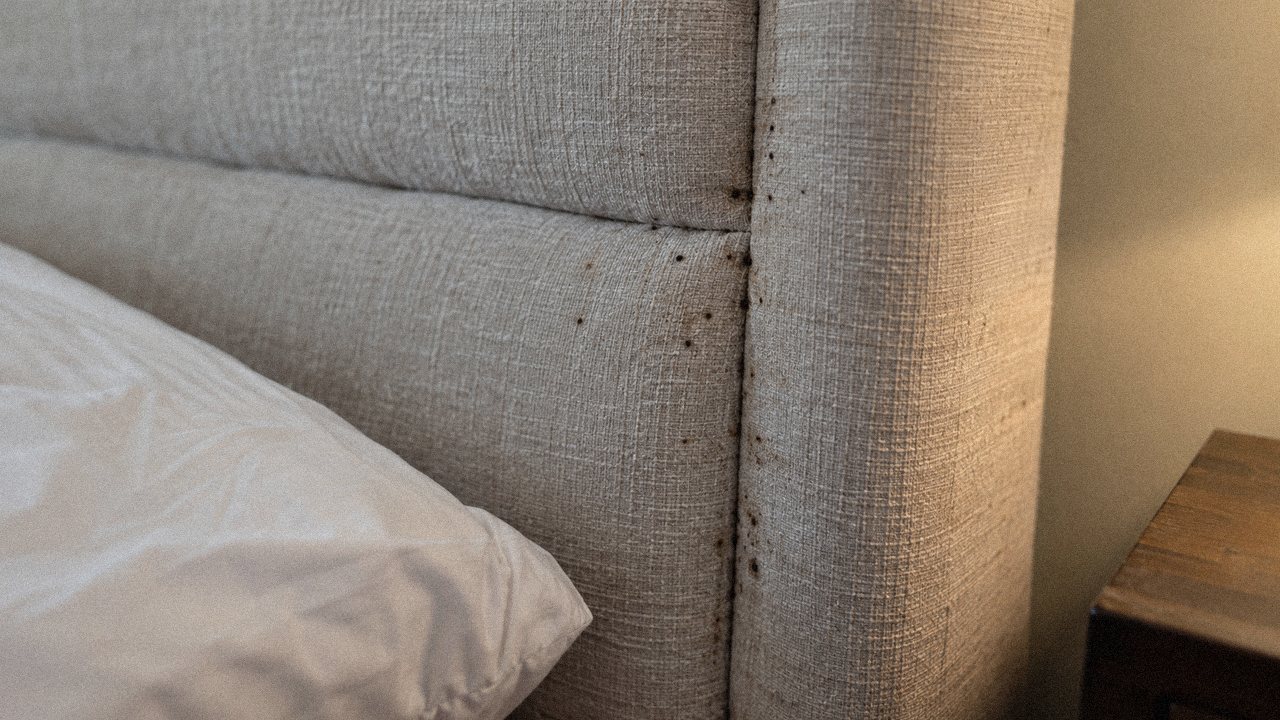
- Rusty or dark spots on sheets, mattress seams and nearby furniture. These are blood and droppings.
- Shed skins, pale, empty shells left when nymphs molt.
- Live bugs in mattress and sheet folds, especially along seams and piping.
- A sweet, musty odor, which UF/IFAS compares to coriander in heavy infestations.
- A tickling or crawling feeling at night, though many people feel nothing at all.
Are Bed Bugs Dangerous?
Bed bugs are not known to spread disease to people, according to the CDC and UF/IFAS. That does not make them harmless. The CDC lists itching, lost sleep, anxiety and skin infections from scratching as real effects, and allergic reactions, while rare, can cause enlarged bite marks, painful swelling and, very rarely, anaphylaxis.
Reactions vary widely from person to person. One family member may wake up covered in welts while another shows nothing, which is why bites alone cannot confirm or rule out bed bugs.
Bed Bugs and Florida Renters: What the Law Says
Many South Florida residents rent, and bed bugs raise a fair question: who handles it? Florida Statute 83.51 requires landlords of dwelling units other than single-family homes and duplexes to make reasonable provisions for the extermination of pests, and the law names bedbugs specifically, unless landlord and tenant agree otherwise in writing. If tenants must temporarily leave the unit for extermination, they must get 7 days’ written notice, the time out cannot exceed 4 days, and the landlord is not liable for damages but must abate the rent.
There are limits. The landlord is not responsible under that section for conditions caused by the negligent or wrongful acts or omissions of the tenant, the tenant’s family or others on the premises with the tenant’s consent, and a written agreement can shift these duties. UF/IFAS also points out that most renters’ insurance does not cover bed bug treatment. Read your lease, report signs to management early and in writing, and get legal advice if there is a dispute. Property managers can find building-wide options on our property management page.
How South Florida Homeowners Can Stay Ahead of Bed Bugs
You cannot make a home bed-bug-proof, but you can make an introduction short-lived:
- Teach everyone in the house what bed bugs and their signs look like. Kids and older relatives are often the first to be bitten.
- Isolate luggage after every trip and dry travel clothes on high heat.
- Inspect used furniture before it comes indoors, and skip curbside mattresses and couches.
- Keep bedrooms uncluttered so there are fewer places to hide and inspections are easier.
- Vacuum around beds and upholstered furniture regularly and empty the vacuum outdoors.
Our step-by-step plan for protecting your home from the South Florida bed bug surge turns these habits into a routine.
When to Call a Bed Bug Professional
Call a professional as soon as you find a live bug, eggs, shed skins or repeated spots on bedding. UF/IFAS notes that bug bombs and homemade remedies are ineffective, and that it may take more than one treatment because adults, nymphs and eggs must all be eliminated.
Toro’s bed bug control service starts with a free inspection. A Toro specialist checks beds, furniture and the surrounding rooms to confirm bed bugs, rule out look-alikes and see how far they have spread. You get a clear plan, a quote and preparation instructions before any work begins. Toro has protected South Florida since 1969, from Miami-Dade and Broward to Palm Beach and the Keys, and every treatment is backed by our 110% Satisfaction Guarantee.

Contact Toro today
A free inspection & $25 off your first service
A trained Toro technician inspects your home or business, explains what was found and gives you a clear plan and quote, backed by our 110% Satisfaction Guarantee.
305-594-4767Frequently Asked Questions
Are bed bugs common in Florida?
Can bed bugs live in my car?
What attracts bed bugs to a home?
Who pays for bed bug treatment in a Florida rental?
How fast do bed bugs spread through a house?
Sources
- About Bed Bugs, Centers for Disease Control and Prevention
- Bed Bugs Appearance and Life Cycle, U.S. Environmental Protection Agency
- Bed Bug Biology and Behavior, Virginia Cooperative Extension, Virginia Tech
- Bedbugs: Biology and Control, NC State Extension
- Integrated Pest Management in the Home Series: Bed Bugs, UF/IFAS Extension
- As bed bugs swarm the news, UF/IFAS experts available to inform about prevention, treatments, UF/IFAS News
- Landlord's Obligation to Maintain Premises (Florida Statutes, Section 83.51), The Florida Senate
Educational content. This article is for general information about pests in South Florida and is not medical, legal or professional advice. If you have a bite, sting or allergic reaction, contact your doctor; in an emergency, call 911. Pest problems vary from home to home, so a licensed professional should inspect before treatment. When using any pesticide, always read and follow the product label.


