Key takeaways
- UF/IFAS puts U.S. termite control and repair costs at about $20 billion a year, with subterranean termites responsible for 80%.
- The eastern subterranean termite is native, found statewide in Florida, including South Florida down to Key Largo.
- A colony may hold 100,000 to 1,000,000 termites and forage up to 150 feet, often unnoticed until remodeling.
- Damage costs include repairs, treatment, inspections, home-sale paperwork and often uninsured losses.
- Moisture control, a visible foundation and annual inspections are the cheapest ways to cut the economic impact.
In this article
- Meet the Eastern Subterranean Termite
- Where the Money Goes: U.S. Termite Costs
- The Costs Homeowners Actually Pay
- Why Small Colonies Still Cause Big Bills
- Warning Signs That Keep Costs Down
- Prevention: The Best Return on Investment
- How Professional Termite Control Reduces the Economic Impact
- Frequently Asked Questions
Eastern subterranean termites have a large economic impact because they are common, hidden and patient. UF/IFAS cites an estimate that termite control and repairs cost about $20 billion a year in the United States, and that subterranean termites account for 80% of it, with native species like the eastern subterranean termite among the main culprits.
For a single household, that national number turns into a very personal bill: repairs to wood you could not see, the treatment itself, inspections and paperwork when you sell, and losses insurance usually will not pay. This article breaks down where the money goes, why this native termite costs so much despite its smaller colonies, and what Florida homeowners can do to keep their share small.
Meet the Eastern Subterranean Termite
The eastern subterranean termite, Reticulitermes flavipes, is the most widely distributed termite in North America. According to UF/IFAS, it ranges from Ontario south to Key Largo and is found statewide in Florida, alongside its close relative the dark southern subterranean termite.
Key facts that shape its economic impact:
- Colony size: 100,000 to 1,000,000 termites, according to UF/IFAS.
- Foraging range: up to 150 feet, through underground tunnels and connected feeding sites.
- Slow start, long life: a new colony may need 5 to 10 years to mature enough to swarm, and Mississippi State University Extension notes the founding king and queen can live 10 to 15 years.
- Swarm timing: in Florida, R. flavipes swarms from about January to April, on warm, sunny early afternoons, usually after rain. South Florida populations may fly earlier than those up north.
Its colonies are smaller than those of the invasive Formosan and Asian subterranean termites, which can run into the millions. That means damage usually builds more slowly. It does not mean it is cheaper: slow damage that goes unnoticed for years is often the most expensive kind.
Where the Money Goes: U.S. Termite Costs
UF/IFAS, citing research by Rust and Su, puts the yearly U.S. bill for termite control and repairs at about $20 billion. Subterranean termites are responsible for most of it:
Source: UF/IFAS EDIS IN369 (citing Rust and Su 2012)
UF/IFAS attributes most of the subterranean share to native Reticulitermes species, including the eastern subterranean termite, the western subterranean termite and the dark southern subterranean termite, plus the invasive Formosan termite. The EPA separately notes that property owners spend over two billion dollars to treat termites.
Need help with pests in South Florida?
Toro Pest Management has protected homes and businesses since 1969. Get a free inspection and $25 off your first service, backed by our 110% Satisfaction Guarantee: if the pests come back, so do we, at no extra cost.
The Costs Homeowners Actually Pay
The national figure is made of thousands of individual bills. For a homeowner, the economic impact usually has five parts.
| Cost category | What it includes | How to limit it |
|---|---|---|
| Structural repair | Replacing studs, plates, door frames, subfloors, trim and cabinets | Early detection; treat before repairing |
| Treatment | Baiting or soil treatment of the colony and the structure | Accurate species ID and a written plan |
| Ongoing protection | Monitoring, renewals, annual inspections | Choose a warranty that matches your risk |
| Real estate impact | WDO inspection findings, repair requests, price talks | Records of treatment and inspections |
| Uninsured losses | Damage your homeowners policy excludes | Prevention; read your policy and contract |
Repairs to Wood You Cannot See
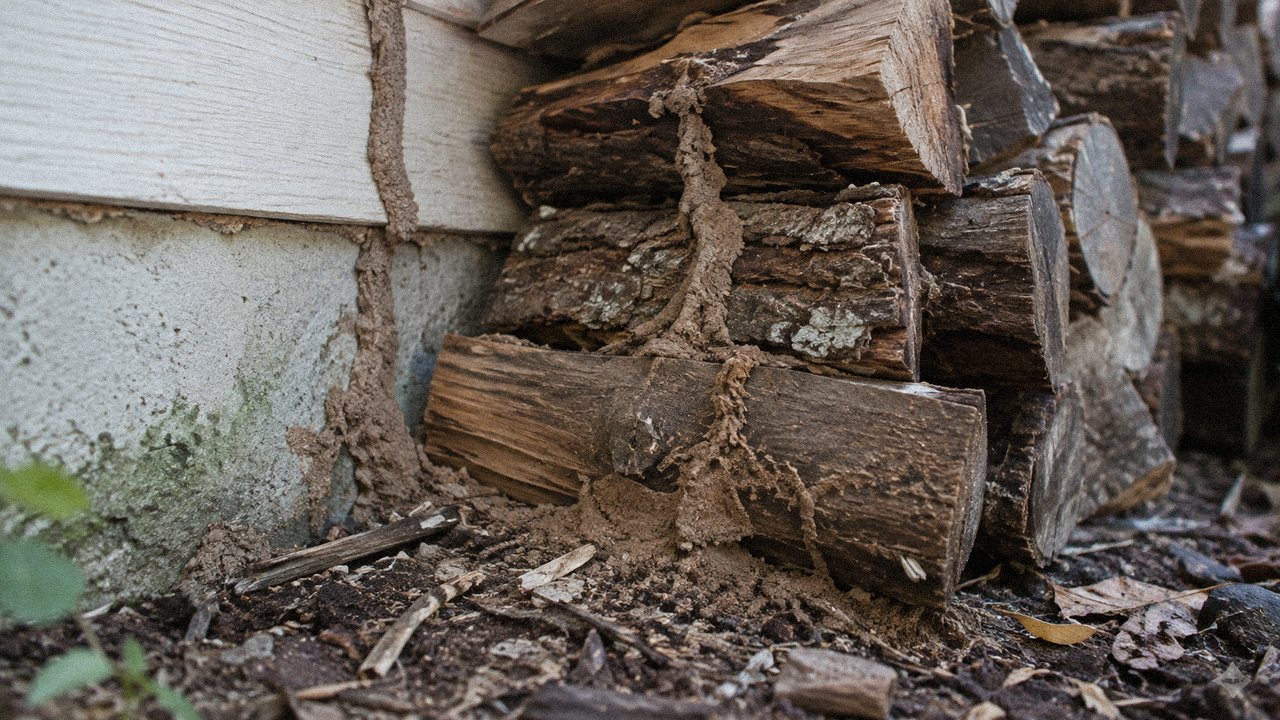
Eastern subterranean termites feed on the cellulose in wood, hollowing it out until only a thin shell remains. UF/IFAS notes infestations are often hidden and damage may be found only during remodeling. Signs include blistered or peeling surfaces over paper-thin wood and mud tubes built up from the ground. Because the damage looks a lot like rot, it is worth reading water damage vs. termite damage before you call a contractor.
Treatment and Long-Term Protection
UF/IFAS states that termite treatments for these species must be applied by a licensed pest management provider. The two main options are non-repellent liquid termiticides, which block colonies from entering the structure, and baits that eliminate colonies that feed on them. Either way, the cost of treatment does not grow much over time, while repair costs do.
Selling or Buying a Home
In Florida, when a termite inspection is part of a real estate transaction, it is reported on the FDACS Wood-Destroying Organisms Inspection Report (form 13645). The form records live termites, evidence such as shelter tubes, and visible damage. It also says plainly that it is not a structural damage report and that hidden damage may exist. A report with findings can lead to repair requests, credits or a renegotiated price. For more on this side of the cost, see how eastern subterranean termites affect your property value.
Insurance Gaps
Do not count on insurance. State insurance regulators such as the Texas Department of Insurance warn that if insects chew on your house, a homeowners policy will not pay for the repairs. Policies vary, so read the exclusions in your own policy, but plan as if the cost is yours. Our guide to how termites can impact your financial stability covers budgeting and contracts.
Why Small Colonies Still Cause Big Bills
Eastern subterranean termites have fewer soldiers and smaller colonies than Coptotermes species. UF/IFAS reports soldiers are only about 1% to 2% of a Reticulitermes colony. The economic risk comes from other traits:
- They are everywhere. UF/IFAS reports Reticulitermes species in every state of the continental U.S. except Alaska, most commonly in the warm, humid Southeast.
- They hide well. Mississippi State University Extension notes a new colony may have fewer than 50 termites after a year and a few hundred after two, so the early years leave almost no trace.
- They connect feeding sites. Colonies form interconnected feeding sites above or below ground, so treating one spot does not end the problem.
- They eat more than wood. UF/IFAS notes they may damage non-wood materials while foraging, and FDACS adds paper products such as books and cardboard.
Warning Signs That Keep Costs Down
The earlier you spot activity, the smaller the repair. Look for:
- Mud tubes running up foundations, slab edges, piers or garage walls
- Swarms on warm afternoons from January to April, often after rain
- Dead swarmers or wings near windows, sinks and bathtubs after an indoor swarm
- Blistered or peeling paint over wood, or wood that a screwdriver sinks into
- Damage found during remodeling, a sign to have the rest of the house inspected
For a closer look at each sign, read signs of an eastern subterranean termite infestation.
Prevention: The Best Return on Investment
Prevention costs are small and mostly one-time, and they make every inspection more effective. UF/IFAS and FDACS recommend:
- Break wood-to-soil contact. Keep structural lumber, fences, trellises and stored wood off the ground near the house.
- Keep the foundation visible. Clear vegetation and mulch from foundation walls and siding so mud tubes are easy to see. Stop siding and foam board 6 to 8 inches above soil, per FDACS.
- Fix moisture problems. Correct leaky plumbing and AC condensate lines, install gutters with extensions and aim sprinklers away from walls.
- Grade for drainage. Slope the yard so water moves away from the foundation.
- Inspect every year. FDACS calls an annual inspection a must for older homes.
Our article on preventative measures against eastern subterranean termites turns this list into a step-by-step plan.
How Professional Termite Control Reduces the Economic Impact
The real economic value of a professional is the time saved between the first sign and the end of the colony. Toro’s termite control service starts with a free inspection: a trained technician identifies the species and checks how far the damage goes. For subterranean termites, including the eastern subterranean termite, Toro installs the Sentricon baiting system around the property, with no drilling into the slab and no trenches. Termites carry the bait back to the colony, which is designed to eliminate it, including the queen, and the stations stay in place for year-round protection.
Toro also offers termite prevention for homes that are not infested yet and pre-purchase inspections for buyers, so you know what you are getting before you close. To see how termite costs add up across all the species in our region, read the economic impact of termites in South Florida.
Contact Toro today
A free inspection & $25 off your first service
A trained Toro technician inspects your home or business, explains what was found and gives you a clear plan and quote, backed by our 110% Satisfaction Guarantee.
305-594-4767Frequently Asked Questions
How much damage do eastern subterranean termites cause each year?
Are eastern subterranean termites found in South Florida?
Do termites lower the value of a house?
Is termite treatment cheaper than repairing termite damage?
What attracts eastern subterranean termites to a home?
Sources
- Native Subterranean Termites: Reticulitermes flavipes, R. virginicus, R. hageni (EDIS IN369), UF/IFAS Extension
- Termite Biology: Eastern Subterranean Termites and Formosan Termites, Mississippi State University Extension
- Protecting Yourself and Your Property Against Subterranean Termites, Florida Department of Agriculture and Consumer Services
- Wood-Destroying Organisms Inspection Report (FDACS-13645), Florida Department of Agriculture and Consumer Services
- Termites: How to Identify and Control Them, U.S. Environmental Protection Agency
- What Your Home Policy Won't Cover, Texas Department of Insurance
Educational content. This article is for general information about pests in South Florida and is not medical, legal or professional advice. If you have a bite, sting or allergic reaction, contact your doctor; in an emergency, call 911. Pest problems vary from home to home, so a licensed professional should inspect before treatment. When using any pesticide, always read and follow the product label.


