Key takeaways
- Subterranean termites target water-damaged wood, so moisture left behind by a storm raises the risk of an infestation (UF/IFAS).
- Flooding does not reliably kill termite colonies; termites can survive submersion and parts of a colony above ground in trees or walls usually survive.
- Floodwater can wash out soil treatments and contaminate bait stations, so treated homes need a post-storm check.
- Trees hollowed by Formosan or Asian subterranean termites can fall in winds that would not normally topple them.
- Move storm debris and salvaged wood away from the house quickly, keep it off the ground and never bury it.
In this article
- Why Termite Risk Rises After a Hurricane
- Storm Season and Termite Season Overlap
- Fallen Trees: A Warning Sign of Hidden Termites
- Your Post-Storm Termite Checklist
- Is It Water Damage or Termite Damage?
- Will Your Termite Treatment Still Work After Flooding?
- Why a Professional Inspection Matters After a Storm
- Prevention Before the Next Storm
- Frequently Asked Questions
Hurricanes and tropical storms raise your termite risk because they leave behind exactly what subterranean termites look for: wet, damaged wood. UF/IFAS entomologists note that termites target water-damaged wood, so moisture from roof leaks, flooding and wind-driven rain makes a home more vulnerable for months after the storm has passed.
Storms also knock down termite-weakened trees, scatter wood debris across yards and can wash out the termite treatment already protecting your home. None of this is visible from the street. This guide explains why storms and termites go together in South Florida, what to check once it is safe to go outside, and how to keep a storm from turning into a termite repair bill.
Why Termite Risk Rises After a Hurricane
UF/IFAS puts it simply: subterranean termites target and feed on water-damaged wood, so storm-related moisture raises the risk of an infestation. In the same article, a UF/IFAS urban entomologist describes May through November as prime time for both storms and pests in Florida.
Several storm effects work together:
- Wet structural wood. Roof damage, broken windows and flooding soak framing, subfloors, baseboards and cabinets. Wood that stays damp is easier for termites to colonize.
- New moisture sources inside walls. A slow leak left by a damaged roof or window keeps wood damp long after the storm, and UF/IFAS lists reducing moisture in and around structures as a key way to prevent Formosan termites.
- Damaged treatment zones. Floodwater can move the soil around your foundation that was treated with termiticide.
- Wood on the ground. Fallen limbs, broken fences and piles of debris become food and shelter right next to the house.
Why Flooding Doesn’t Drown the Colony
Many people assume a flood kills termites. According to Clemson Cooperative Extension, some colonies are reduced, but subterranean termites have ways to survive. They can close their breathing holes for long periods; in one study, about half of submerged native subterranean termites survived more than 19 hours. Termites can also float, and parts of a colony living above ground in a structure or tree are likely to survive. The LSU AgCenter notes that termites in wood above the floodwater return to lower levels once the water recedes.
Storm Season and Termite Season Overlap
South Florida’s storm season begins right as the Formosan subterranean termite, one of the most damaging pest termites in the world, finishes swarming. According to UF/IFAS, it swarms from early April to late June, peaking in May, and the Atlantic hurricane season runs from June 1 through November 30, with its statistical peak around September 10.
active peak
Source: UF/IFAS EDIS IN278; NOAA
That timing matters. Winged Formosan termites look for cracks and crevices with enough moisture to start a new colony, according to UF/IFAS. New colonies founded in spring are small and hidden by the time summer storms arrive, and fresh moisture from leaks gives them more places to grow.
Need help with pests in South Florida?
Toro Pest Management has protected homes and businesses since 1969. Get a free inspection and $25 off your first service, backed by our 110% Satisfaction Guarantee: if the pests come back, so do we, at no extra cost.
Fallen Trees: A Warning Sign of Hidden Termites
Formosan and Asian subterranean termites, both established in some urban areas of Florida, eat living trees from the inside. Formosan termites feed on the dead wood at the center of the trunk and fill the cavity with carton, a blend of soil, wood pulp, saliva and termite feces (UF/IFAS). The tree can look healthy while its core is hollow.
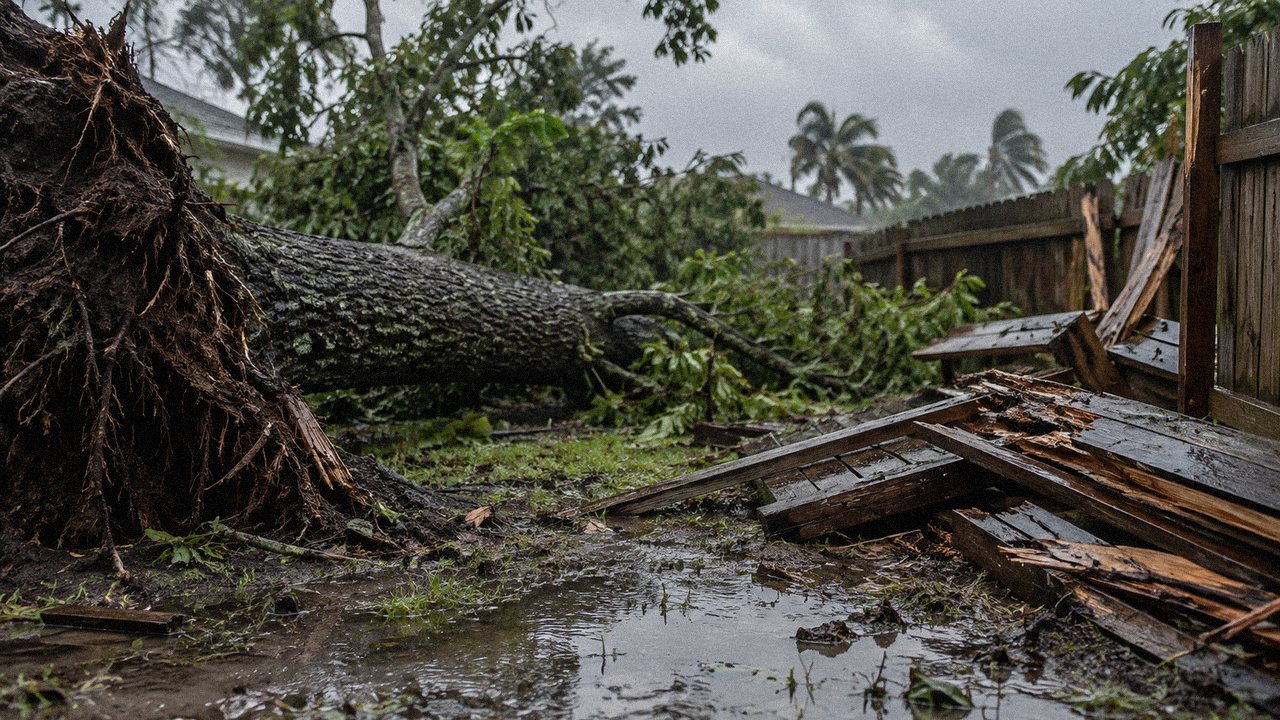
After Hurricanes Debby, Helene and Milton in 2024, UF/IFAS reported that some fallen trees had already been weakened by termites. UF/IFAS urban entomologist Thomas Chouvenc warns that termite-damaged trees may fall even in winds that would not normally be strong enough to topple them. A fallen tree with unusual, hollowed damage can mean invasive subterranean termites are active nearby, possibly around your home as well.
If a tree on your property broke or fell:
- Look at the break. Mud-like carton, soil-packed galleries or a hollow center are red flags.
- Inspect remaining trees near the house for mud tubes on the trunk.
- Have trees and the structure inspected by a licensed pest control company.
Learn more about the two invasive species in our profiles of the Formosan subterranean termite and the Asian subterranean termite.
Your Post-Storm Termite Checklist
Once the property is safe to walk, work through these areas over the following weeks.
| Area | What to look for | What to do |
|---|---|---|
| Roof, attic and ceilings | Leaks, wet insulation, stained wood | Dry out and repair leaks quickly |
| Walls and baseboards | Swollen, soft or blistered wood or paint | Remove wet materials, dry framing before closing walls |
| Foundation and slab edges | Eroded soil, sediment, new mud tubes | Note changes and have the treatment zone checked |
| Bait stations | Flooded, displaced or buried stations | Ask your provider to inspect and service them |
| Trees and stumps | Hollow trunks, carton, mud tubes | Inspect remaining trees; remove fallen wood |
| Yard and debris | Wood piles, broken fencing, lumber on soil | Remove promptly or store off the ground, away from walls |
Handle Storm Debris the Right Way
The LSU AgCenter, writing about Formosan termites after Gulf Coast hurricanes, recommends:
- Remove debris from around the house as quickly as possible.
- Move salvaged wood off the ground and away from the structure.
- Do not move salvaged wood, paper or similar items to another property until a termite inspector has checked them.
- Cut downed trees and large shrubs into sections and take them to a disposal facility.
- Do not bury wood. Buried wood becomes termite food as it decays.
- Remember that mulch made from storm debris is also termite food, so keep it thin and away from the foundation.
Is It Water Damage or Termite Damage?
After a storm, it can be hard to tell whether a soft baseboard or a sagging floor came from water, termites or both. Water-damaged wood tends to be swollen, stained or moldy. Subterranean termite damage follows the grain of the wood, and galleries are often packed with soil. Termites also love wood that water has already softened, so one problem can hide the other.
UF/IFAS notes that live termites are needed to confirm an active infestation, so do not tear out damaged wood before someone has looked at it. For a side-by-side comparison, read water damage vs. termite damage.
Will Your Termite Treatment Still Work After Flooding?
If your home already has termite protection, a hurricane can still compromise it. Clemson Extension explains that:
- Soil treatments may need retreatment if flooding eroded or shifted the soil or left sediment over the treated area.
- Bait stations can be contaminated by polluted floodwater, making the bait less attractive to termites, so the bait and sometimes the station housing may need replacing.
- Wood treatments applied directly to lumber can be leached out by floodwater.
Call your termite company after any significant flooding and ask them to inspect the treatment. Also review your contract so you know whether retreatment and repairs are covered, and contact your insurance company, as Clemson Extension advises after a flood.
Why a Professional Inspection Matters After a Storm
Termites work inside wood and soil, so a visual check from the outside can miss them. UF/IFAS states that control of Formosan termites requires professional services because over-the-counter products are unlikely to work.
A Toro termite control inspection is free. A trained technician identifies the species and checks how far any damage goes. For subterranean termites, Toro installs the Sentricon baiting system in the soil around the property, with no drilling into the slab and no trenches; the stations stay in place for year-round protection against new colonies. Drywood termites are treated differently, with TORO-GUARD non-tenting injections for localized colonies or tent fumigation when they have spread. Toro has protected South Florida homes since 1969 and responds within 24 hours, guaranteed. If you want to know what happens during the visit, read what to expect during a termite inspection.
Prevention Before the Next Storm
The best time to prepare is before hurricane season starts:
- Fix leaks now. Roof, plumbing and AC leaks give termites moisture year-round, and storms make them worse.
- Clean gutters and extend downspouts so rain drains away from the foundation.
- Trim and inspect trees near the house, and have any with mud tubes or hollow sounds checked.
- Keep wood off the soil. Store firewood, lumber and building materials away from walls and off the ground.
- Keep mulch thin and leave the foundation visible so mud tubes are easy to spot.
- Schedule an annual inspection, and book an extra one after any storm that brings flooding or roof damage.
For broader storm-prep advice covering rodents, mosquitoes and ants, see our tips to keep your home safe from pests during hurricane season.
Contact Toro today
A free inspection & $25 off your first service
A trained Toro technician inspects your home or business, explains what was found and gives you a clear plan and quote, backed by our 110% Satisfaction Guarantee.
305-594-4767Frequently Asked Questions
Do hurricanes and floods kill termites?
Does flooding wash away termite treatment?
Is termite damage from a storm covered by insurance?
How soon after a hurricane should I get a termite inspection?
Can termites come in with storm debris or used lumber?
Sources
- UF/IFAS Expert Shares Pest Control Tips for Hurricane Season, UF/IFAS News
- Fallen Trees Can Reveal Hidden Termites: UF/IFAS Expert Offers Identification and Prevention Resources, UF/IFAS News
- Formosan Subterranean Termite, Coptotermes formosanus Shiraki (EDIS IN278), UF/IFAS Extension
- Floods, Termites & Termite Treatments, Clemson Cooperative Extension Home & Garden Information Center
- Proper Debris Removal Keeps Formosan Subterranean Termites From Spreading After Hurricanes, LSU AgCenter
- Earth from Orbit: Atlantic Hurricane Season Hits Its Peak, NOAA NESDIS
Educational content. This article is for general information about pests in South Florida and is not medical, legal or professional advice. If you have a bite, sting or allergic reaction, contact your doctor; in an emergency, call 911. Pest problems vary from home to home, so a licensed professional should inspect before treatment. When using any pesticide, always read and follow the product label.


